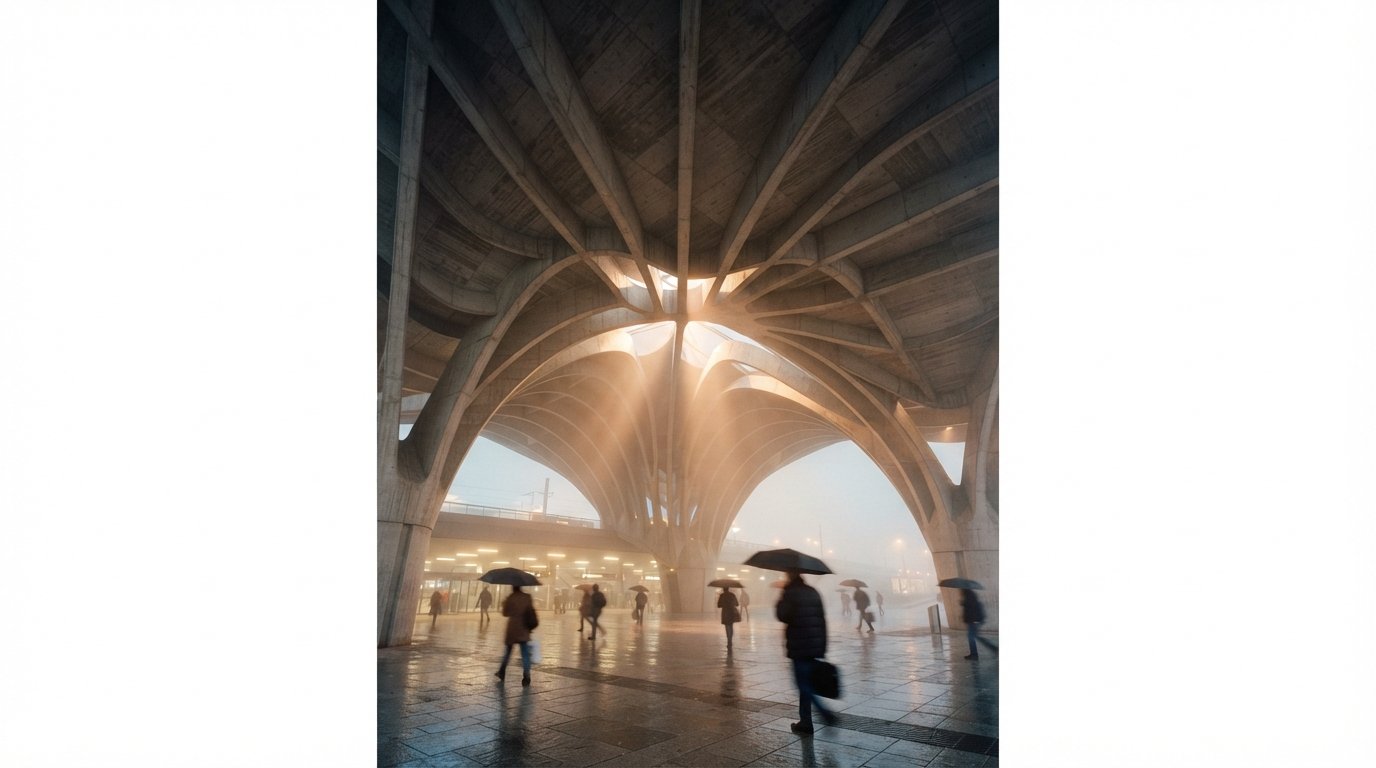
Read this week's roundups back to back and the same rhetorical move keeps surfacing. One tool was built with input from a marquee practice. Another was trained on award-winning work. A third is trusted by leading studios. Each sentence borrows credibility from a name you already respect and hands it to a product you have not tested yet. None of the three is a specification. They are all references, and a reference is not a result.
The three shapes of a pedigree claim
Sort the claims and there are really only three. The first is consultation: a famous studio gave input on the product. The second is training data: the model saw prize-winning images while it learned. The third is adoption: big firms use it, and here are their logos. All three are true statements a vendor can make without lying, and all three are designed to answer a question you never asked. You wanted to know whether the tool holds your building. They told you whose name is nearby. The move works because it is hard to argue with. Nobody wants to be the architect who says a famous practice's involvement means nothing, so the claim slides past the part of your brain that would otherwise ask for evidence.

A substrate render does not inherit a pedigree
Most of the tools making these claims, Gendo and Veras among them, are substrate tools. They take your geometry, your sketch, or your massing model and restyle it. The building in the output is the building you gave them. So think about what it would mean for a model built with input from Zaha Hadid Architects to actually change your work. It would have to push your suburban clinic toward parametric curves you never drew. That is not a feature. That is the geometry drift every architect on r/archviz complains about, rebranded as prestige.
Pedigree, if it does anything, shapes the training distribution the model learned from. It does not transfer a studio's house style onto your project, and you would fire a tool that tried. The whole promise of a substrate renderer is that your design decisions survive the render. A pedigree claim quietly implies the opposite, that some of the famous firm's magic rubs off on your output, and those two promises cannot both be true.
Award-winning is unverifiable, and beside the point
No vendor publishes its training set, so trained on award-winning work is a claim you cannot check and cannot falsify. Set that aside and it still misses. Awards filter for aesthetics: the jury liked how the finished image looked. The things that actually break in an architectural render are not aesthetic. They are geometry fidelity, reflections that match the real sky, scale that reads at human height, and entourage that does not melt. A model trained on a million gorgeous competition boards can still float a column or invent a mullion, because the prize never taught it structure. It taught it mood.
You wanted to know whether the tool holds your building. The claim told you whose name is nearby.
The logo wall measures sales, not renders
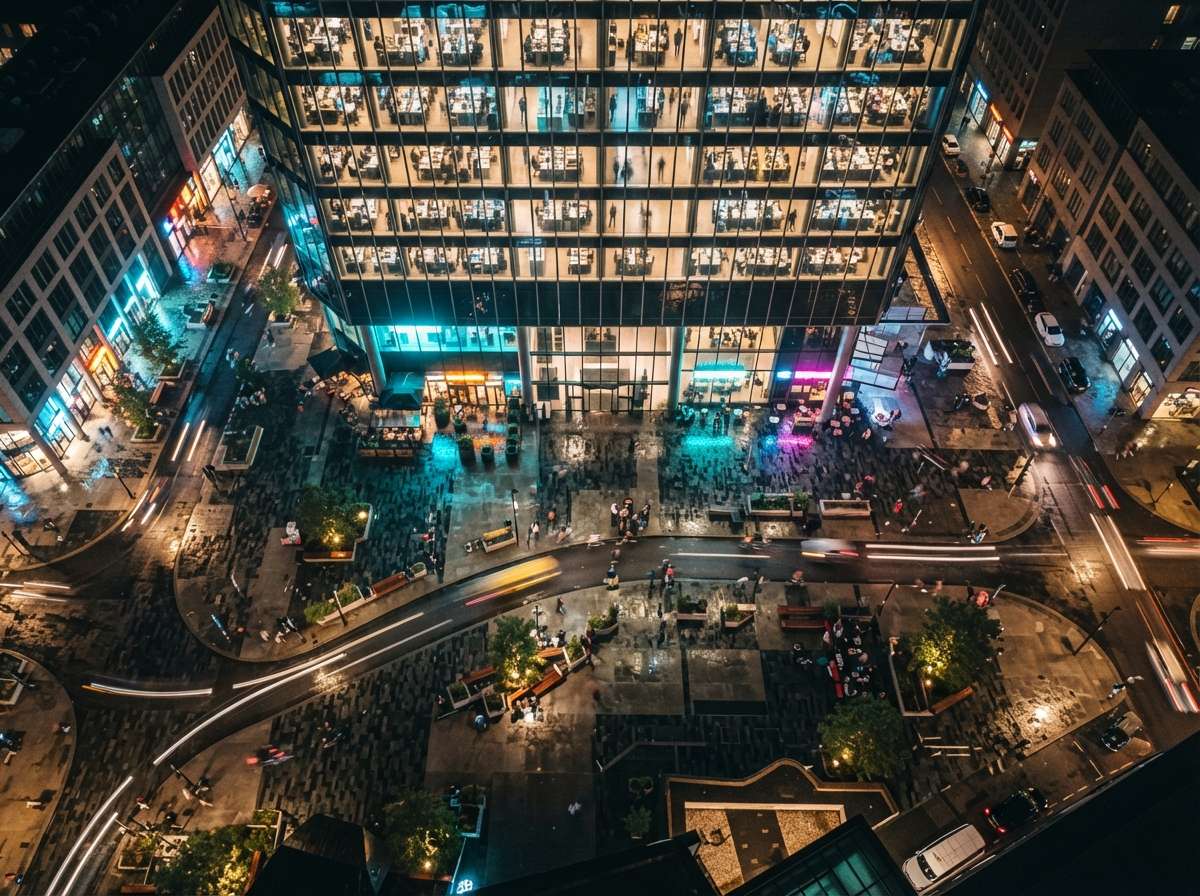
Trusted by leading studios is the softest of the three, because a logo only proves that someone somewhere signed a contract. A large firm can license a tool for one team's pilot, run it on three internal studies, and never ship a client project with it, and the logo stays on the vendor's homepage for years afterward. Adoption at that scale measures a sales team's reach and a procurement department's willingness to experiment, not whether the render survived a real deadline. This is the one claim you can partly check, though, because you know people. Ask someone at a named firm what they actually use the tool for. The answer is usually narrower than the logo implies, and sometimes the honest answer is that they tried it once and went back to what they had.
Where a real data claim would matter
There is a defensible version of all this, and it is worth naming so you can tell it apart. A model trained on architectural imagery, rather than generic consumer photos, should understand curtain walls, parapets, mullion grids, and site context better than a general image model does. That is a genuine capability, and capabilities are testable. The tell is that a real capability claim describes what the model does, while a pedigree claim describes who was in the room. One invites a test. The other asks for trust.
So run the test. Feed the tool your own hardest case: a glazed corner, a tricky roof junction, the material you always lose to hallucination. If the model understands architecture, it holds those under pressure. If it was mostly built with a press release, it will drift exactly where a general model drifts, and the famous name in the footnotes will not have moved a single pixel of your parapet.
You know what right looks like when you see it. A domain-aware model keeps a mullion grid evenly spaced instead of wandering, respects a datum line across a facade, and leaves a flat roof flat rather than quietly pitching it into a gable because most houses in the training set had one. Those are not aesthetic wins you argue about in a review. They are correctness, and correctness is the only part of a render your consultants and your planning authority will actually hold you to. A tool either preserves it or it does not, and no origin story changes the answer.
| The claim | What it borrows | What to actually check |
|---|---|---|
| Built with practices like [firm] | The firm's reputation | Does it hold your geometry on a hard case? |
| Trained on award-winning work | The prestige of the images | Reflections, scale, and structure on your test render |
| Trusted by leading studios | Customer logos | A trial on your own project, not the demo scene |
Our take
Pedigree is the easiest claim to make and the hardest to verify, which is exactly why it clusters on the tools with the least to show. The vendors sitting on real domain models tend to lead with what the model does to a building, because they can. The ones leading with whose name they can borrow are asking you to grade the render by its references instead of its results, and that is a grading scheme that only helps the seller. Open a trial, load your worst drawing, and look at the output. A famous name in the training notes has never once fixed a mullion.
Written from the 2 August 2026 intel sweep, which surfaced Gendo's Top 10 AI Rendering Software for Architects in 2026 citing tooling built with practices like Zaha Hadid Architects as a reason to rank itself first, alongside seven other best-tool roundups leaning on similar pedigree language. ArchiGen AI carries no sponsored placements.