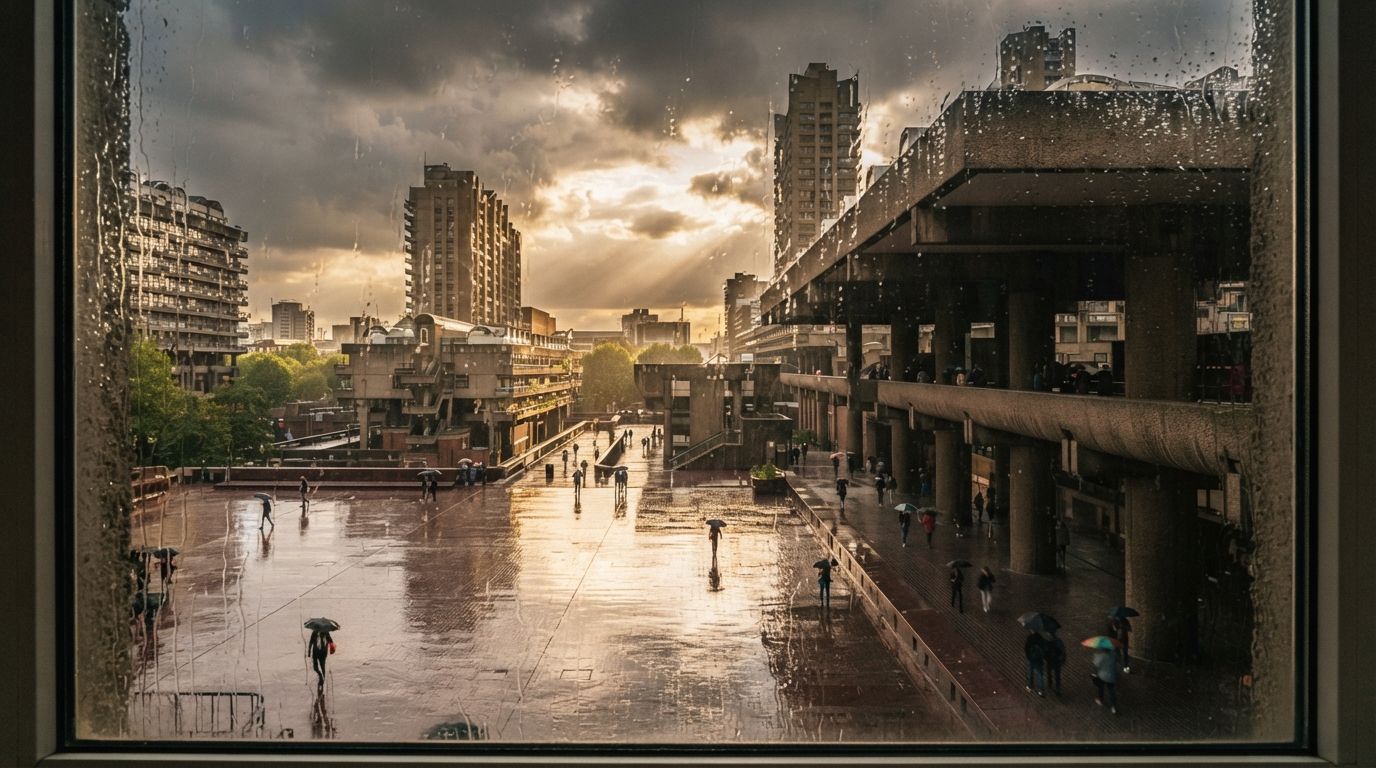
Put a language model on a leaderboard of render engines and it will finish near the bottom, because you are asking a writer to draw. That is not a knock on the tool. It is a category error in the test, the same one that makes people conclude a great editor is a mediocre novelist. ChatGPT keeps turning up in these architecture stacks for a reason, and the reason has almost nothing to do with the images it can produce.
A language model is a poor renderer
Start with the honest part. As an image maker, ChatGPT is passable for a loose mood frame and weak everywhere an architect actually cares. It does not hold your geometry, because it never had your geometry, it had a description of it. It invents structure to fill gaps, drifts on scale, and treats materials as vibes rather than surfaces. Ask it for your building and you get a building, confidently rendered, that is not yours. Lined up against tools built to respect a source model, it loses on every axis those tools were designed to win, and it should. If the job is turning your SketchUp export into a faithful frame, reach for the tool built to do exactly that.
So the shootout instinct to score it low as a renderer is not wrong. It is just answering a question that undersells why the tool is in the chain at all. Nobody who keeps ChatGPT in their workflow is keeping it there for the render. They are keeping it there for the sentence that made the render better.
The job it is quietly best at
ChatGPT is a language model, and its native talent inside a render stack is language. It sits upstream of the pixels, doing the work a good art director does before anyone touches a rendering engine: turning a fuzzy intent into a precise instruction. You know your building should feel like a quiet civic room at dusk with soft north light and honest concrete. You are often bad at saying that in the specific, loaded vocabulary a diffusion model responds to. ChatGPT is good at exactly that translation, and translation is most of the battle in a prompt-driven pipeline.
Watch how it actually gets used in the better workflows and it is never the last step. It is the first. It writes the prompt that Midjourney or Nano Banana then renders. It drafts the brief you reuse across a whole set of frames so the mood stays consistent. It reads an output back and tells you, in words you can act on, why the image feels wrong. None of that is rendering. All of it decides whether the render is any good.
Stop scoring the writer on the drawing. ChatGPT's output in a render stack was never the image. It is the sentence that made the image better.
Where it earns its slot
Three jobs, concretely, and none of them produce a pixel. The first is prompt translation. You describe the scene in architectural terms, materials, orientation, time of day, the feeling of the space, and it hands back a prompt tuned to the model you are feeding, with the phrasing and weighting those models actually respond to. You edit it, you learn from it, and your next prompt is sharper because you saw how it named things.
The gap this closes is bigger than it sounds. Left to our own devices, most architects type something like modern house, sunset, realistic, and wonder why four tools all hand back the same generic magazine shot. Hand the same intent to ChatGPT and you get back a paragraph naming the low warm sun angle, the board-formed concrete, the deep reveals, the single figure for scale, the slight haze that reads as evening air. You did not know those were the words the model was waiting for. Now you do, and the next time you write the prompt yourself.
The second is the reusable brief. Have it write a short, structured description of the project: the palette, the light, the camera language, the three words the client keeps using. That brief becomes the spine every frame hangs off, so a set of ten renders reads as one project instead of ten moods. The third is the critique loop. Paste a finished render back in and ask what reads as fake, what a jury would flag, where the light lies. It will not always be right, but it turns a vague dissatisfaction into a specific, fixable note, and a specific note is worth an hour of squinting.
| Where architects drop ChatGPT in | What it is actually good for there |
|---|---|
| As the render tool, judged on its image | Little. This is the category error. |
| Before the render, writing the prompt | Translating architectural intent into model-ready language |
| Across a set, writing the brief | Holding mood and vocabulary consistent frame to frame |
| After the render, in critique | Turning a vague this-feels-off into a specific, fixable note |

The one place it will burn you
There is a hard limit, and it is worth stating plainly because the tool never will. ChatGPT is a stylist of language, not a source of truth. It will assert a code figure, a material property, or a spatial relationship with total confidence and be wrong, and the confidence scales with how plausible the lie sounds. Keep it away from anything factual you cannot check yourself. The prompt it writes is a suggestion you are free to improve. The fact it states is a coin flip you should never take on trust. Use it to shape language, not to settle questions, and the failure mode mostly stays contained.
Spatial reasoning is the sharpest edge of that limit. Describe a stair wrapping a double-height void and ask it to reason about sightlines or where the light falls, and it will answer fluently and often incorrectly, because it is pattern-matching on sentences about stairs, not holding a model in its head. That is fine when you want prompt words and dangerous when you want a spatial judgment. You are the one who can see the section. Let it name the mood and keep the geometry yours.
Our take
ChatGPT belongs in plenty of architecture render stacks, just not in the seat everyone keeps testing it in. It is not the renderer. It is the person in the room who is excellent with words and cannot hold a pen: give it the brief, the prompt, and the critique, and take away the final image and any claim you cannot verify. Scored as a render tool it will keep losing to the tools built to render, and the videos will keep saying so. Score it on how much sharper your prompt got and how much steadier your set reads, and the same tool that finished last on the leaderboard turns out to be doing half the work that made the winners look good. Rank the writing, not the drawing, and it stops being a curiosity in the stack and starts being the reason the stack works.
Written from the 5 August 2026 intel sweep, which surfaced both a four-tool shootout including ChatGPT and a community workflow chaining ChatGPT with Midjourney and Nano Banana for architectural renders. ArchiGen AI carries no sponsored placements.