Midjourney is the most-used AI image tool in architecture. It's also the most misused. The same model that produces stunning concept moodboards can also waste an entire afternoon trying to render a building that doesn't exist outside your SketchUp file. The difference between the two outcomes is knowing which one you're doing.
The Midjourney trap
The trap looks like this: an architect sees an incredible Midjourney render on Instagram. They sign up. They try to recreate the magic on their actual project. The output looks nothing like their building. They blame themselves, blame the model, or both, and quietly stop using it.
None of those reactions is correct. Midjourney was never going to render their actual project. That's not what it does. What it does, exceptionally well, is produce visual reference material with a particular kind of authored aesthetic. Architects who use it for that get enormous value. Architects who try to use it for anything else don't.
The V8.1 update
V8.1 dropped in February 2026 with three changes that matter for architecture work.
Better light handling. V8.1 reads "golden hour," "overcast," "blue hour," and "north light" with much more accuracy than V7. The improvement is most visible in interior renders, where V7 used to flatten everything into noon. V8.1 holds atmospheric mood across multi-image sets.
Native 4K output. No more upscaling for hero shots. V8.1 generates at 4096px on the long edge by default. This sounds minor and is not, it eliminates an entire workflow step for moodboard work.
Style References stabilised. The --sref system is now consistent across re-rolls. Pin a Sergison Bates image as your style reference and Midjourney will hold the register across 12 generations. V7 drifted by image 4. V8.1 doesn't.
What V8.1 didn't fix: geometry. Buildings still grow extra columns. Windows still appear in walls that didn't have them. Plan views are still impossible. None of that is going to change in V9, V10, or V20. It's a category limitation, not a version one.
Where it excels
Moodboards. The fastest way we know to develop a project's visual register. Three to five prompts in the early days of a scheme produce twenty reference images that tell us what kind of building we're trying to make. We never present these. They live on the studio pinboard and shape every subsequent decision.
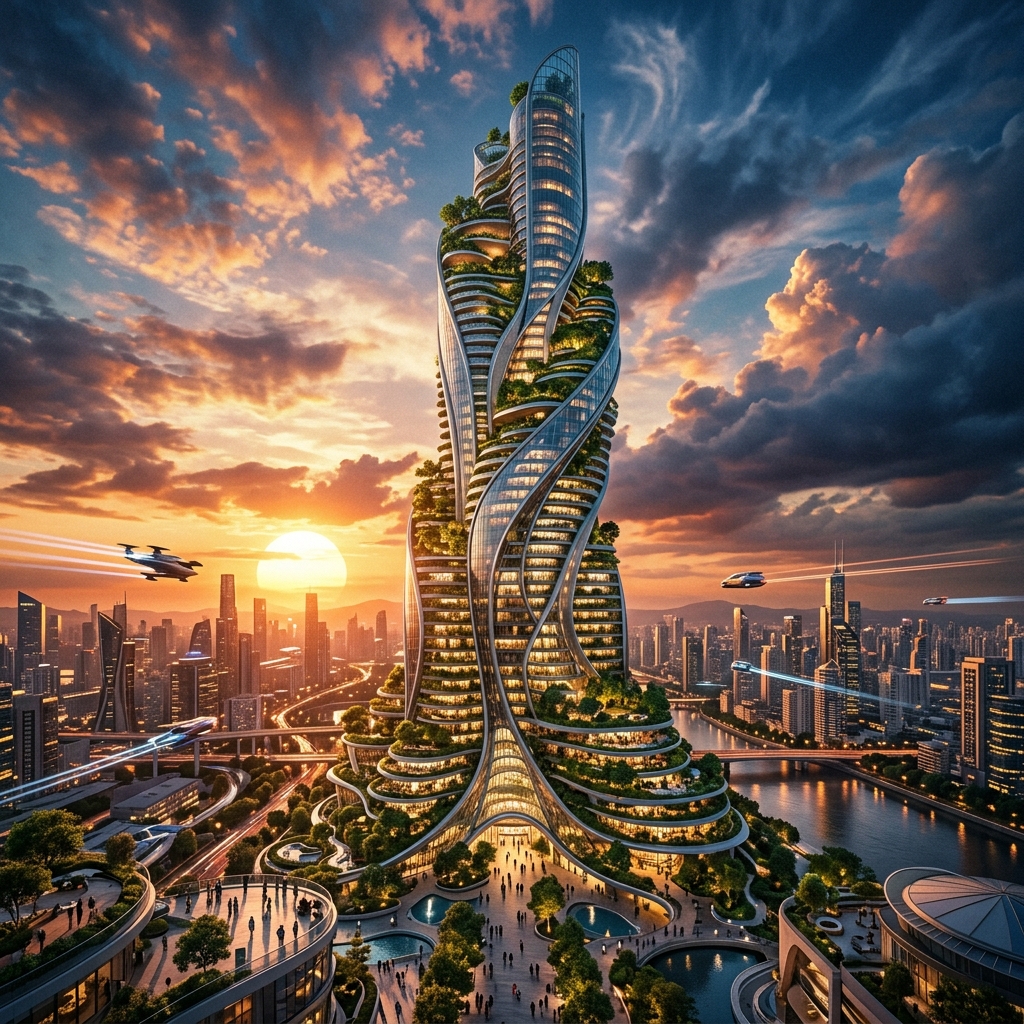
Concept renders. If your scheme is at the stage where the form is still moving, Midjourney is excellent at producing variations on a verbal brief. "Six ways to interpret 'a chapel on the moor'" is a very Midjourney task. Each output will be its own building. You're not rendering a design, you're auditioning ten of them.
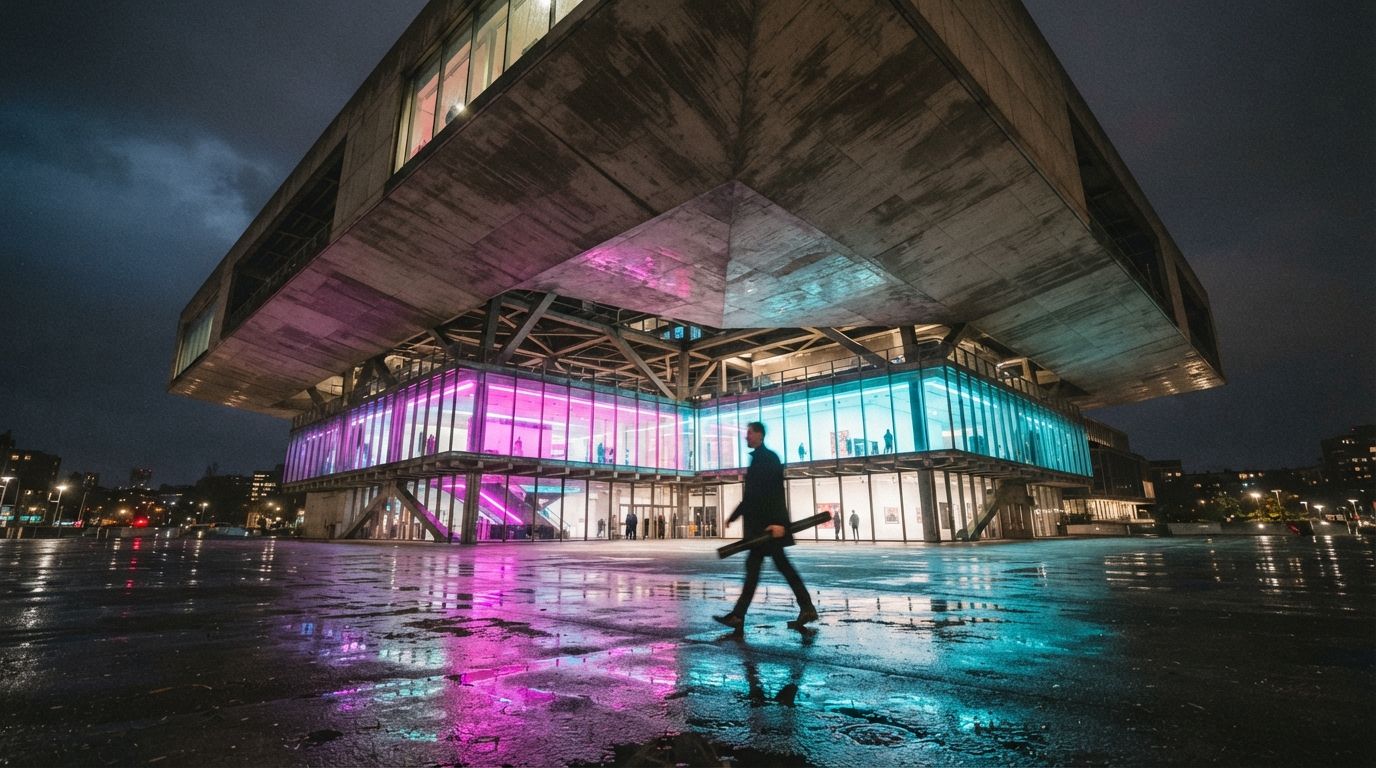
Lighting and atmosphere. Midjourney's read on light is its strongest point. "Wet plaza, hour of blue, sodium-vapor streetlights" produces an image that looks like a photograph someone took. The atmospheric pass is what V-Ray takes 40 minutes to do. Midjourney does it in 30 seconds.
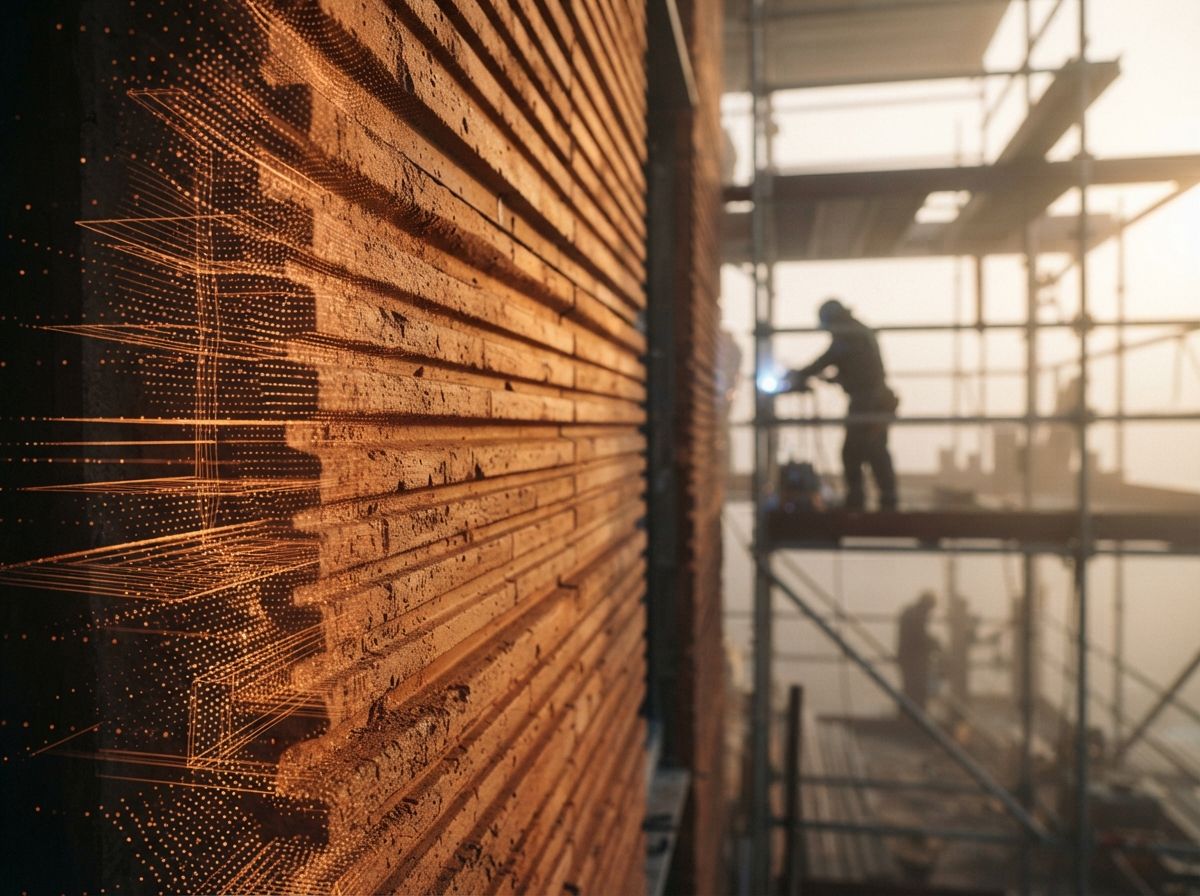
Material studies. Want to see what your scheme could look like in board-formed concrete vs. corten steel vs. stack-bonded brick? Six prompts, eighteen images, an afternoon's worth of decisions made in twenty minutes.
Where it fails
Geometry fidelity. Discussed above. Don't ask Midjourney to render your building. It will render a building. The two will not be the same building.
BIM integration. Midjourney doesn't integrate with anything. There's no Revit plugin, no SketchUp connector, no API for studios who want to wire it into their pipeline. Everything happens in Discord or the web app. Both are fine for individual use, awful for team workflow.
Plan views. Ask Midjourney for a site plan and you'll get an isometric. Ask for a plan and you'll get a perspective looking down. The model has no concept of orthographic projection. Don't bother.
Repeatability. Even with --sref pinned, Midjourney is a slot machine. A great image cannot be reliably reproduced. This is the single biggest reason Midjourney can't be a production tool, you can't iterate on a specific output, only re-roll near it.
How to actually use it in practice
This is what works for us, after two years of trying things that didn't.
Use Midjourney at the front of the project, not the back. Schematic design, concept exploration, mood-finding. Once the geometry is locked, switch to Veras, Rendair, or ComfyUI. Don't go back to Midjourney for presentation work.
Build a studio --sref library. Curate 20 to 30 reference images that represent your firm's aesthetic register. Pin them as Style References for any new project. The output gets noticeably more "yours" within five generations.
Prompt like a brief, not a haiku. "A modern minimalist building" produces slop. "A three-storey research building, cast-in-place concrete with deep window reveals, set in a forest clearing at 4pm in October, north-facing main facade, slight overcast" produces something specific. Specificity is the entire game.
Treat the output as a brief, not a deliverable. Use Midjourney images as references for your Veras renders, not as substitutes. The Midjourney image tells your team what mood to aim for. The Veras render is what the client sees.
Pay for the standard plan, not basic. $30/month, unlimited Relax mode generations. The Basic plan ($10) runs out of fast hours in three days of real use. Anyone using Midjourney for actual work needs Standard.
Midjourney is a strong concept tool and a weak technical tool. The architects who get value from it know which one they're using it as.
The split verdict
The studios producing the best Midjourney work are clear-eyed about both halves of this rating. They use it intensively for the front of the project, then put it down and switch tools. The studios producing the worst Midjourney work are the ones still trying to render their building with it.
If you're currently fighting with Midjourney to render your actual project, stop. That's not what it's for. Use it for the moodboard, then move on.
No affiliate relationship with Midjourney. Reviewed on V8.1, March 2026 release.