If you visited chaos.com/veras in February, the strapline read "Best-in-class AI visualization for architects. Built in your workflow." If you visit it today, a third sentence has been quietly appended. "Powered by Nano Banana 2." Two words, no press release, no email to subscribers, no announcement video. The plugin you already have installed inside SketchUp or Revit has a new engine.
This matters more than the marketing copy suggests. Nano Banana 2 is Google's current state of the art image generation model, released earlier this year and previously available only through Gemini and the Vertex AI API. It is the same model behind several of the most photorealistic AI architecture renders circulating on Instagram and ArchDaily this spring. As of this Veras release, that model is now sitting behind a plugin we run inside the same modeling software where the architect builds.
What actually changed under the hood
Earlier versions of Veras (3.x through 4.0) appeared to be built on a fine-tuned Stable Diffusion pipeline with Chaos's own ControlNet-style geometry conditioning. The 4.x line introduced significantly better geometry preservation, which we wrote about at the time. The current release keeps the Veras-side conditioning intact (depth maps, segmentation, prompt structure) but routes the actual image synthesis to Nano Banana 2 instead of the in-house diffusion stack.
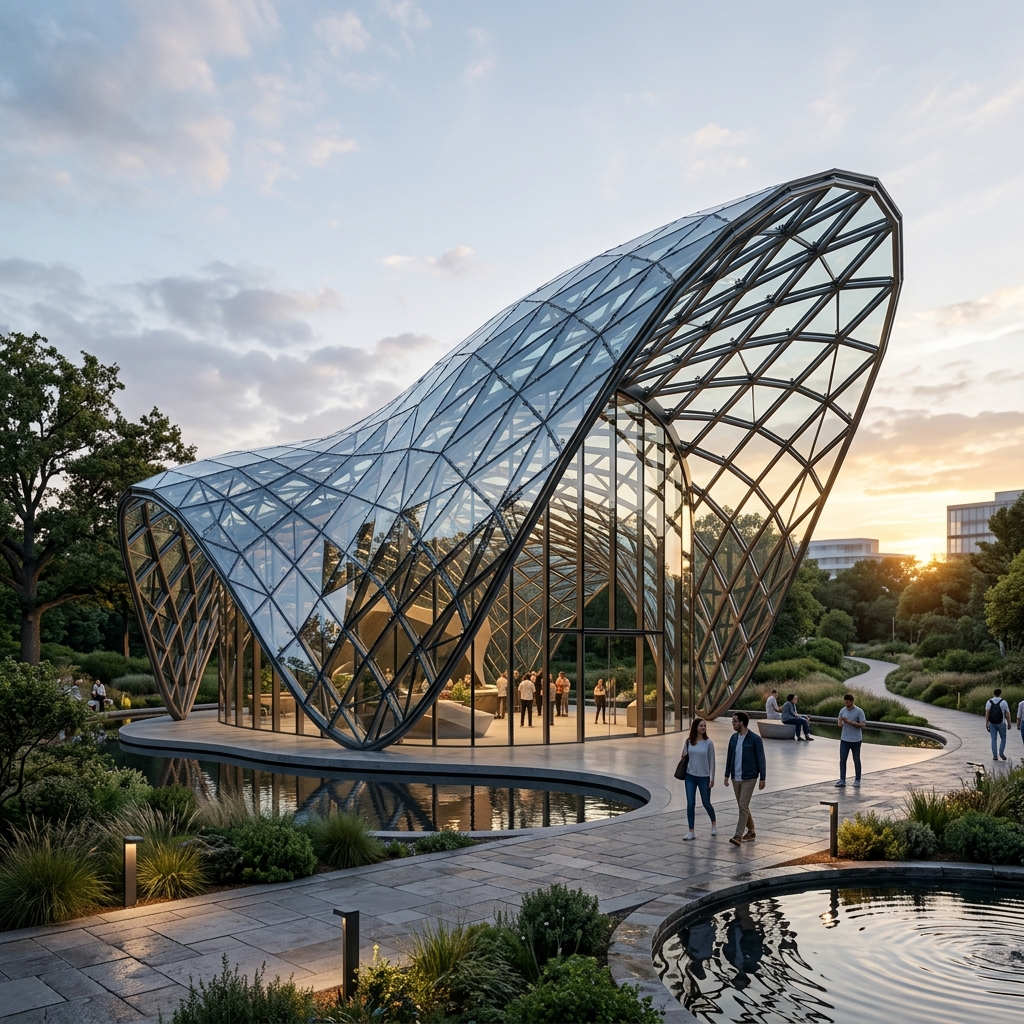
The architectural implication is straightforward. NBP2 is better than the previous Veras engine at three specific things: complex material interaction, low-light and dusk scenes, and human-scale entourage. The model has been trained on a much wider dataset than the previous Veras backbone and renders interior light bounce, weathered material behavior, and contextual figures more convincingly. The previous engine was reliable. The new engine is reliable and noticeably more cinematic.
Material reading is sharper
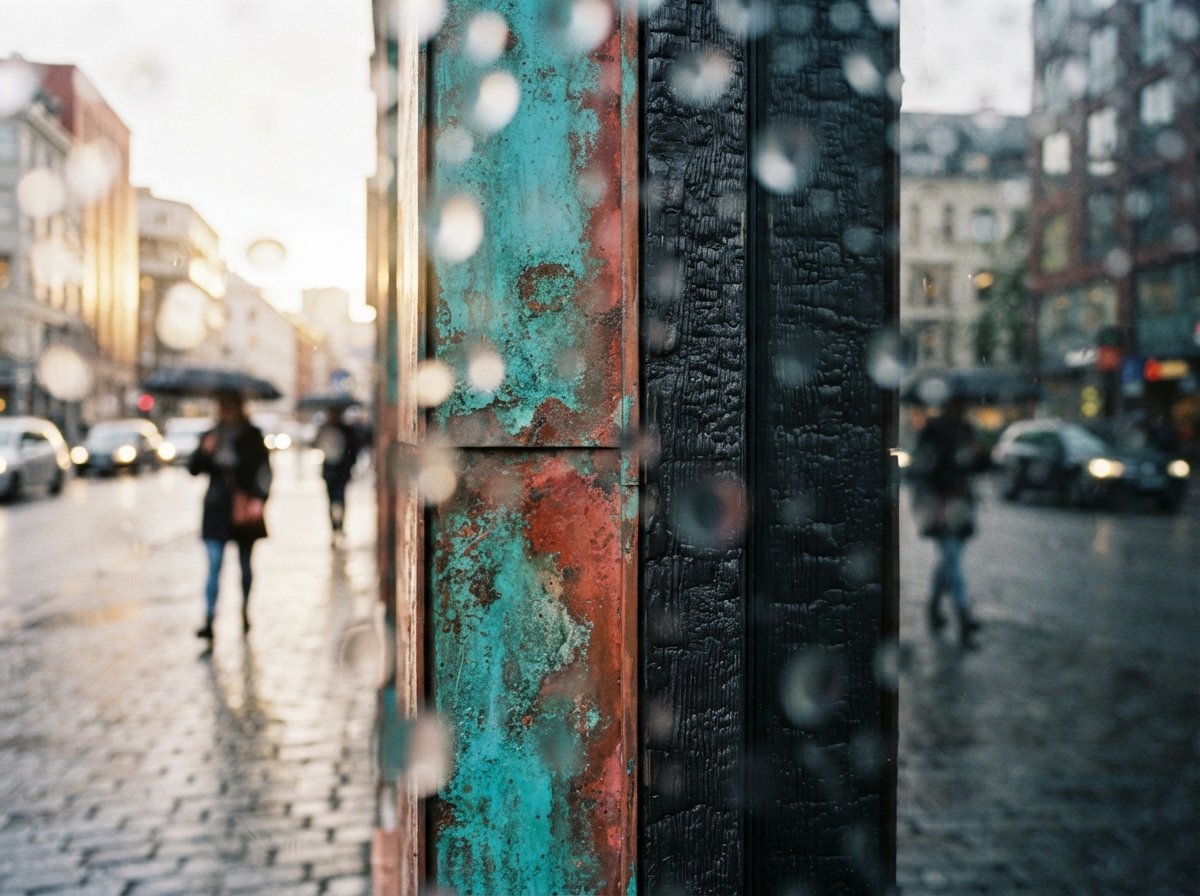
We ran the same SketchUp model through Veras 4.0 (cached output from January) and Veras 4.3 (current, NBP2-backed) this week. Six exterior views of a small courtyard housing project, identical seeds, identical prompts. The current build reads weathered copper, charred cedar, and rough-sawn fir as distinct materials with distinct surface behavior. The January build read them as roughly the same dark cladding family. For projects where the material palette is doing real architectural work, this is meaningful.
Dusk and night are now usable
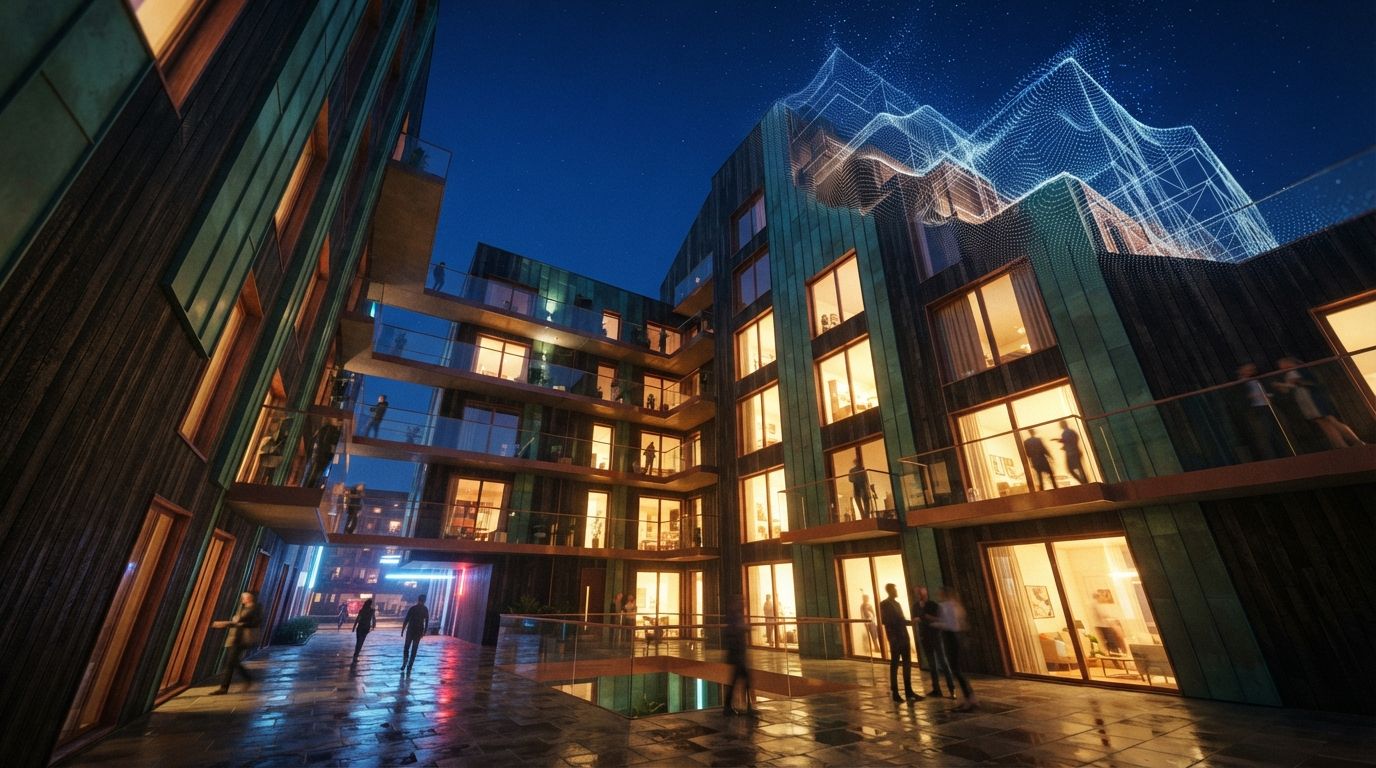
Veras has historically been a daytime tool. Dusk and night scenes were generated at quality levels well below the daytime equivalents, with halo artifacts around light fixtures and unnatural color temperature shifts. NBP2 handles low light considerably better. A 9pm street view of the same courtyard project, with warm interior light spilling through windows, came back from Veras 4.3 looking like a competent V-Ray dusk pass. From Veras 4.0 the equivalent view was unusable.
Entourage is no longer the giveaway
Anyone who has used Veras in client meetings knows the AI-tell most often comes from the entourage. Stretched faces, slightly wrong hand counts, figures with garments that defy gravity. NBP2 handles humans considerably better than the previous engine. The figures still are not perfect (close-cropped portraits still drift) but at the typical archviz scale and distance they read as plausibly real instead of plausibly synthetic.
Why this matters
The architectural rendering market has spent the last 18 months in an awkward middle stage. AI rendering tools were good enough for concept work and consistently failed for production deliverables. Studios kept Lumion or V-Ray for the final passes and used AI tools for early-stage exploration only. The gap between the two outputs was visible enough that clients sometimes noticed.
NBP2 inside Veras narrows that gap. Not closes it. The new engine is still a generative model, with all that implies for material accuracy and shadow study reliability. But it is now plausible for a small or mid-size practice to deliver concept-grade and presentation-grade visualization without leaving the Veras plugin. That is a meaningfully different position than the same studio was in three months ago.
The strategic move from Chaos
Chaos has built its business on V-Ray and Enscape, both of which still represent the production-grade end of architectural rendering. Plugging a Google model into Veras is a confident move. It says: we believe the future of the AI exploration tier is third-party foundation models, not in-house diffusion, and our job is to package that intelligently inside the modeling tools architects already use. That is also probably correct.
The longer-term read: Veras becomes a thin orchestration layer over whatever frontier image model is best at any given moment. Today it is NBP2. In six months it could be a refreshed Imagen, a refreshed Midjourney API, or the next Anthropic image model. The Chaos value is in the geometry pipeline, the modeling-software integration, and the prompt orchestration, not in the diffusion weights. That is a defensible position, and the kind of architecture rendering studios should pay attention to.
Caveats and concerns
Pricing has not changed yet
Veras subscriptions have not moved upward following the NBP2 switch. That is good for current subscribers and almost certainly temporary. Nano Banana 2 inference is more expensive than the in-house diffusion model Chaos previously ran. Either Chaos is absorbing that cost as a growth move, or pricing will adjust at the next contract renewal. Watch for the change.
Determinism is slightly worse
The NBP2 backbone introduces a small amount of additional non-determinism even with seed locking. We saw this in our identical-seed test. Two passes at the same seed and prompt produced renderings that were 92% identical, not 100% identical. Small ornamental details (window mullion patterns, the exact arrangement of figures, the precise mass of a tree) varied between runs. For most concept work this is invisible. For comparative sequences where consistency matters (a sun study, a series of small material variants), it is a real friction.
You are now generating images via a Google model
Worth flagging for any practice with confidentiality or IP constraints. The geometry pass and prompt content now travels through Google's infrastructure. Chaos has presumably negotiated a usage-rights and data-handling agreement that makes this acceptable for most studios. Read it before pushing client work through. Sensitive projects (government, defense, regulated commercial) should confirm with their compliance team.
How to think about your workflow now
| Phase | Before NBP2 switch | After NBP2 switch |
|---|---|---|
| Concept exploration | Veras + Midjourney, often combined | Veras alone, generally sufficient |
| Design development presentation | Veras for early DD, V-Ray for final | Veras for most DD, V-Ray for final |
| Marketing material | V-Ray and external retouching | Veras output now closer to publish-ready |
| Sun and shadow studies | V-Ray, Enscape | V-Ray, Enscape (unchanged) |
| Dusk and night views | V-Ray (Veras unreliable) | Veras now usable |
Should you update
If you already run Veras, update to 4.3 today. The improvement is large enough to justify a quick verification pass on a current project. If you previously dropped Veras for material handling reasons, this is the right month to re-evaluate. If you are choosing between Veras and Rendair, the calculus has shifted toward Veras on the strength of NBP2's general image quality, though Rendair still wins on BIM-grade geometry and material specification accuracy.
If you have been waiting for an AI rendering tool good enough to commit to as your main concept and DD pipeline, this is the closest the category has come. The tool architects already had inside their modeler just got better in the ways that mattered.
The full Veras 4.3 changelog
Our deep read of the latest Veras update, including the asset placement improvements and Envision integration changes that landed alongside the engine switch.
Read the Veras 4.3 update analysis →No affiliate relationships with Chaos or Google.