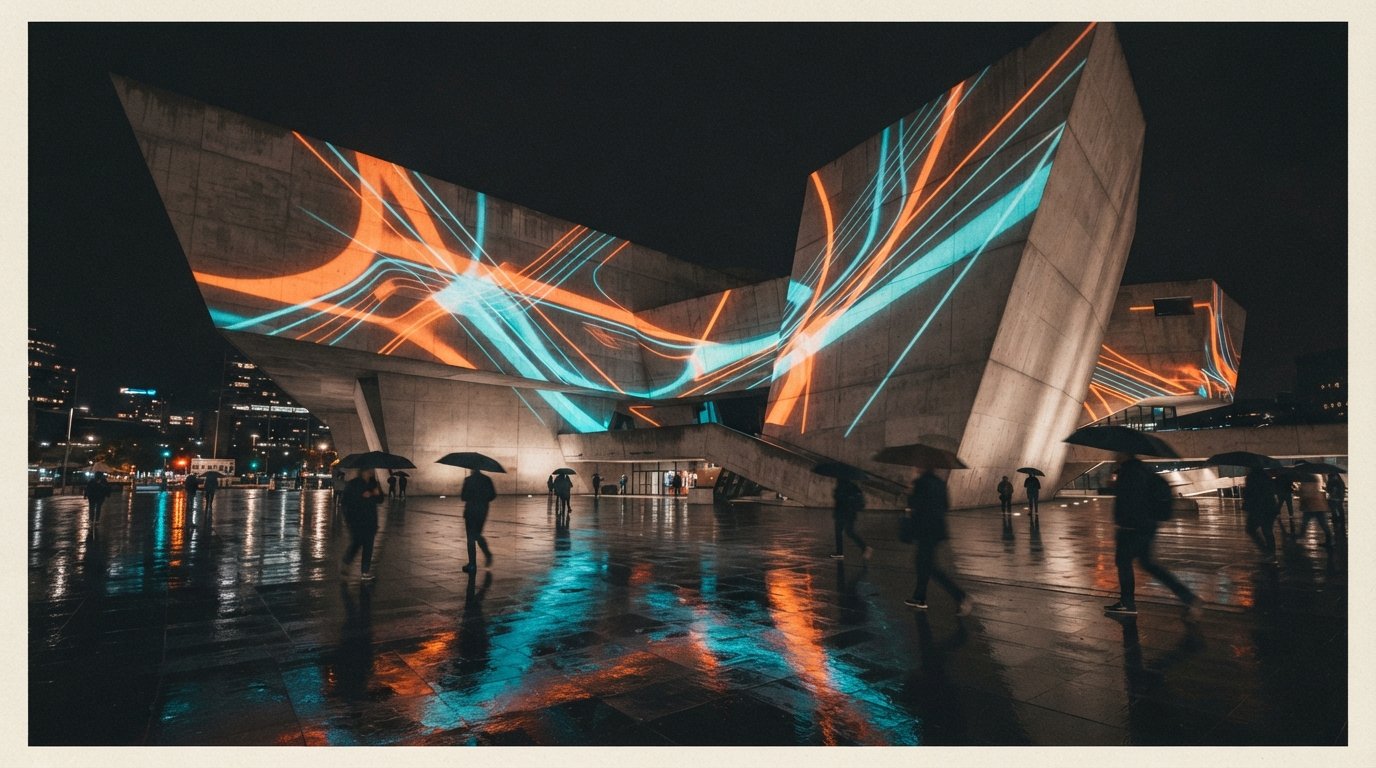
Start with what the vendor actually claims, because the claim is unusually honest. EvolveLab does not say Veras reproduces your building. It says Veras treats your geometry as a substrate, a starting surface the model paints on top of. Chaos, which now carries the Veras line, uses the same shape of language: your 3D model, your 2D drawing, or your sketch becomes an input the AI interprets, not a blueprint it obeys. Read literally, that is a promise about idea speed, not about millimetre fidelity. The tool is telling you, in its own marketing, that it will take liberties.
Why "it lacks accuracy" is the wrong yardstick
The r/archviz complaint is real, and the renders behind it are real: a mullion that shifted, a railing that turned to a smear, a slab that gained ten centimetres it never had in Revit. If your task that afternoon was a construction-adjacent visual, something a contractor or a client might read as a commitment, then yes, the output failed you. But it failed you the way a mood photograph fails a survey. Nobody files a magazine spread as a site plan. The accuracy you went looking for was never on the menu, and the tool said so before you pressed render.
Veras is an idea machine wearing a renderer's interface. The interface is the part that fools people.
The confusion is structural, not a mistake you should feel bad about. Veras lives inside Revit, Rhino, and SketchUp, the same windows where you produce documents that are supposed to be exact. When a tool sits one toolbar away from your construction set, your brain files its output under the same standard of truth. That is the trap. The button is next to your drawings, so you expect drawing-grade output, and the model was never built to hand it back.
The two jobs people keep collapsing into one
Almost every "Veras lacks accuracy" thread is really one job pretending to be another. Sort the two apart and the tool stops feeling broken.
Ideation, where Veras earns its seat
Early in a project you are committing to nothing. You want to see the massing under a warm evening sky, test whether brick reads better than a rendered concrete, put three material moods in front of a client before lunch. Here the liberties are the feature. A model that invents a plausible reflection or a believable tree is doing exactly the job of a concept sketch, which was never accurate either, just persuasive and fast. Judged as a thinking tool, Veras is genuinely quick, and the fact that it starts from your real geometry keeps the proportions honest even when the details wander.
Documentation, where it was never going to hold
Later in a project, accuracy is the whole point. The window count has to match the schedule. The railing height has to survive a code review. A slab thickness the model hallucinated is not a quirk, it is a liability if it reaches a drawing. This is the stage where people post the angry threads, and they are right to be annoyed, but they are annoyed at a screwdriver for being a poor hammer. For documentation-grade output you want a tool that renders your geometry rather than reinterprets it: your real-time engine (Enscape, Twinmotion, D5) or a controlled pass where the model is locked to your inputs, not free to improvise.
Veras already shipped the fix for this, and people skip it
The honest counter to the accuracy complaint is that Chaos has spent the last two releases adding control, precisely because users kept asking the ideation tool to behave. Image input and design-lock style features exist so you can pin the model closer to your geometry and turn the creativity dial down when a project has moved past exploration. The people posting "it lacks accuracy" screenshots are, more often than not, running the tool wide open at a stage that needed it clamped. The liberties are adjustable. The complaint usually is not that the control does not exist, it is that nobody reached for it.

How to place Veras in a real project
You do not need a philosophy of AI to use this well. You need to know which question you are asking this week.
- Concept and schematic: run Veras loose. Let it invent. You are buying speed and options, and a wandering mullion costs you nothing when the design is still a conversation.
- Design development: tighten the controls, feed it cleaner geometry and reference images, and start checking output against your model rather than against your taste.
- Construction documents and client commitments: stop reaching for the ideation tool. Render what you modeled with an engine that does not improvise, and use Veras, if at all, only for the presentation gloss layered on top of an already-correct image.
Do that and the tool stops disappointing you, because you have stopped asking it for the one thing its own product page told you it does not sell.
What this means when the meter is running
There is a cost angle that the accuracy debate usually buries. Veras runs on a credit system, so every generation you burn is money, and the fastest way to waste it is to fight the tool for fidelity it does not owe you. Watch how the frustrated-user session actually goes: they run a documentation-stage view, the balcony drifts, they re-roll, the mullion count changes, they re-roll again, and forty credits later they still do not have a drawing-accurate image, because no seed was ever going to give them one. That is not a rendering budget, it is a slot machine. The credits were spent chasing the one output the model is structurally incapable of guaranteeing.
The disciplined version is cheaper and calmer. Spend Veras credits where re-rolling is the point, the concept and mood stage, where each variation is a real option you might pick. When the project crosses into development and documentation, stop feeding the credit meter and move the image to an engine that renders your geometry as drawn. You will spend fewer credits, get outputs you can actually stand behind, and stop resenting a tool for a failure that was really a stage mismatch. The subscription math only looks bad when you point the tool at the wrong week.
Our take
The most useful thing about Veras is that it says what it is out loud. Substrate for creativity is not marketing fog, it is a spec. An architect who reads that phrase and still grades the renders like shop drawings is holding the tool wrong, then filing the review. Match the tool to the stage, turn the creativity dial to fit the week, and the accuracy debate mostly evaporates. The tool that lies to you is the one that promises fidelity it cannot keep. Veras is the rarer thing, a tool that told you the truth before you got mad at it.
Written from the 30 July 2026 intel sweep, which surfaced EvolveLab's Veras positioning ("a substrate for creativity and inspiration") alongside the recurring r/archviz thread reporting that the Revit renderer "lacks accuracy but is interesting." Control-feature behavior is described from general familiarity with the Veras releases, not a fresh re-benchmark. ArchiGen AI carries no sponsored placements.