Who owns an AI-generated architectural render, and can you use it commercially?
Using a render commercially and owning it are separate questions. Commercial use needs the model license and the tool's terms of service to allow it, and some, such as FLUX development weights, do not. US Copyright Office guidance says prompt-only machine output is not protected, so add real human authorship to renders that matter.
The thread was ordinary enough. Someone asked how to get Midjourney-grade output from a local pipeline, and the answer that drew agreement was to switch models, use Qwen, Flux or Z-Image instead, with an aside that the license mostly concerns generating images for third parties rather than the images you produce for yourself. It was a throwaway line in a technical argument. It also happens to sit on top of the single most expensive misunderstanding in AI archviz right now.
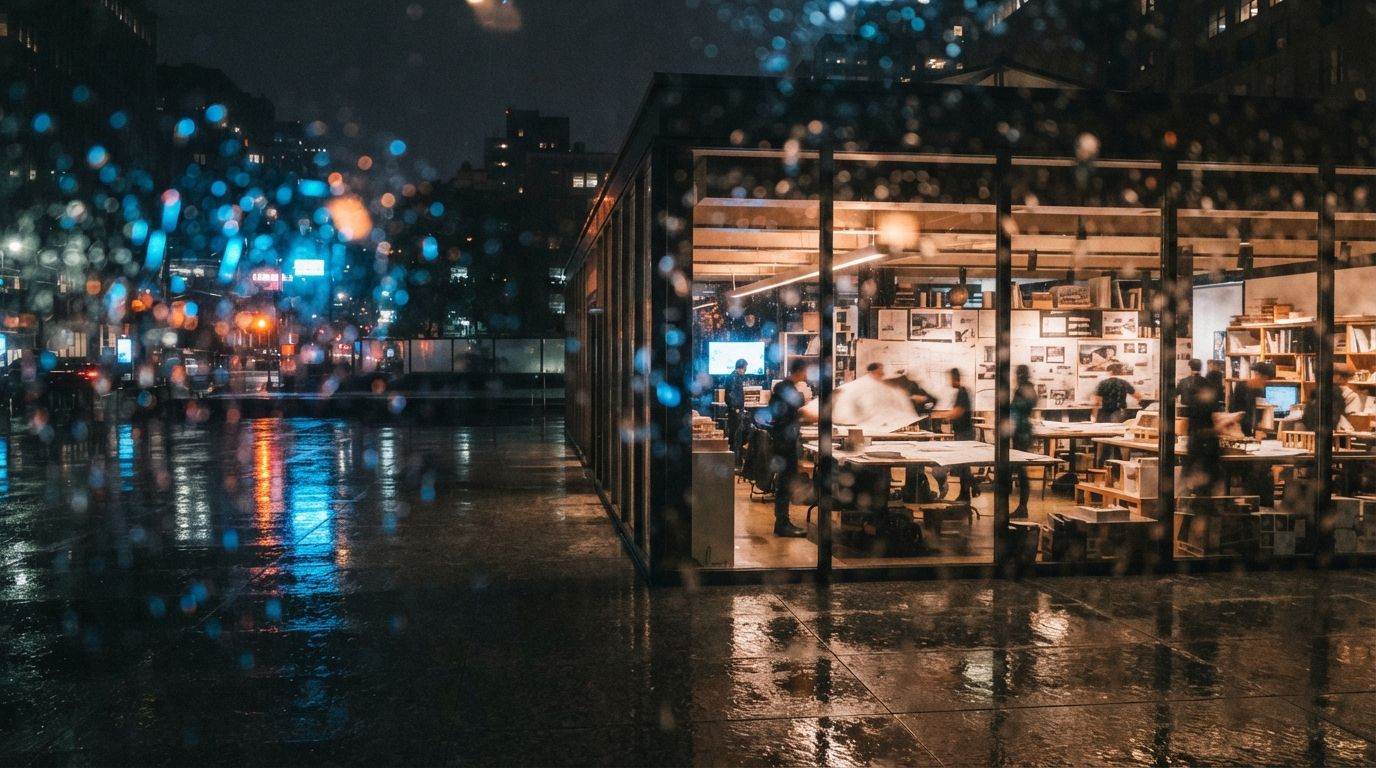
An architect does not make renders for a hobby. A render goes on a competition board, into a planning submission, onto a page in a fee proposal, sometimes onto the cover of a brochure the client prints two thousand times. Every one of those is a commercial act. And the question of whether you are allowed to perform it does not have one answer. It has three, stacked on top of each other, and they do not always agree.
Three permissions, not one
Pull them apart and the confusion clears up fast. The first permission lives in the model license: is this particular set of weights allowed to be used commercially at all. The second lives in the terms of service of whatever tool wraps that model: what rights the vendor grants you over the outputs while you pay them. The third is copyright: whether the finished image is something you can own and stop other people from copying. Use, sell, own. Different questions, different sources, and a render is only safe when all three line up.
Most people check none of them, because the tool put a picture on the screen and nothing exploded. The trouble surfaces later, when a competitor reuses your board image, or a client's lawyer asks you to warrant that the deliverables are yours to license. At that point the gap between generated it and owned it stops being academic.
The model layer, where free has fine print
Open-weight image models are not one category. FLUX is the clearest example, because it ships in versions that carry opposite permissions under the same brand. The distilled fast variant is released under a permissive open-source license and is fine to use commercially. The high-quality development weights that most enthusiasts actually run are released under a non-commercial license, which means the impressive render you just made with them is, strictly, for research and personal use. Commercial rights come from the vendor's paid tier or API, not the freely downloaded file. The Facebook aside had it half right: the restriction is real, and it lands on exactly the professional use an architect cares about.
Other families sit differently. Several Qwen image releases carry a permissive Apache-style license that does allow commercial use of the outputs. Stable Diffusion's family has generally permitted commercial output for years, subject to a use policy. Newer entrants like Z-Image are worth reading closely precisely because they are new and the terms have not settled into folklore yet. The point is not to memorise a chart that will be stale in a quarter. It is to stop assuming that open to download means free to bill.
| What you generated with | Commercial use of output | The catch to verify |
|---|---|---|
| FLUX fast / distilled build | Generally yes | Confirm the exact variant; the brand covers several licenses |
| FLUX development weights | No, without a paid grant | Commercial rights come from the API or licence, not the download |
| Qwen image family | Often yes | Read the specific release; permissions differ by version |
| Midjourney (paid plan) | Yes, you own assets | Larger firms may be pushed to a higher tier for those rights |
| Wrapped tool (Veras, Gendo, others) | Yes while subscribed | Rights can end with the subscription; check retention terms |
The tool layer, where you rent your rights
Most architects never touch raw weights. They open Veras inside Revit, or Gendo in a browser, or Midjourney in a chat window, and the model question is answered for them by the vendor. That is convenient, and it moves the risk rather than removing it. Now the governing document is the terms of service, and those vary more than the marketing pages suggest.
Midjourney's paid subscribers own the images they create, with a well-known wrinkle that companies above a revenue threshold are steered toward a higher plan to keep those rights. Subscription rendering tools typically grant you commercial use of outputs while your account is active, which raises a question worth asking before you archive a project: do you still hold the rights to a render you made two years ago on a plan you have since cancelled. A few vendors go further and offer indemnification, a promise to stand behind you if an output is challenged. Adobe built that into Firefly as a selling point. Most competitors have not, which tells you how confident the rest of the field is about the training-data questions still working through the courts.
The tool did not sell you a render. It rented you permission to make one, on terms you agreed to without reading.
The copyright twist nobody mentions
Say the model license clears and the terms of service clear. You can use the render and sell it. Here is the part that surprises people: you may not be able to own it in the sense that matters, which is the right to stop someone else from copying it. Guidance from the US Copyright Office has been consistent that material produced by a machine from a text prompt, with no meaningful human authorship, is not protected by copyright. Human contribution in the selection, arrangement and editing can earn protection for those contributions, but a one-prompt render sitting alone is thin ground.
For a practice, that cuts both ways. The render you put on a public board might be freely copyable by a rival, and there is little you can do about the AI-generated portion of it. The flip side is a reason for optimism about liability: the more a render is the product of your framing, your model, your retouching and your judgement, the more it looks like your work and not the machine's. The professional value was never in pressing generate. It was in everything you did around it, which is also, conveniently, the part the law is most willing to call yours.
What a practice should actually do
You do not need a legal department to close most of this exposure. You need a short habit. For each tool in the pipeline, know which model and license it runs on, and keep the receipt. Prefer tools whose terms grant durable commercial rights that survive the subscription, and note which ones offer indemnification if a client demands a warranty. When a render matters, add real human authorship, framing, composition, edits, so the deliverable is defensibly yours rather than a bare prompt result. And keep the prompt, the base image and the edit history for anything you sign your name to. This is the same discipline we argued for when auditing which render subscriptions to cancel, applied to the paperwork instead of the invoice.
Our take
The forum comment that started this was trying to be helpful about model quality and stumbled into a distinction the whole industry keeps blurring. Vendors sell a feeling of ownership, a big export button and a clean gallery, because friction does not demo well. The actual grant of rights is buried three documents deep and changes with your plan, your revenue and the model underneath. None of this should stop an architect from using these tools. They are too good and too fast to skip. It should stop an architect from assuming that because the render exists, it is theirs to sell. Read the license once per tool, write down the answer, and the question never has to be answered by a lawyer.
Sourced from a ComfyUI model-selection discussion in the 9 August 2026 intel sweep, plus the published licenses for FLUX, Qwen and Midjourney and US Copyright Office guidance on AI-generated works. This is general information for practitioners, not legal advice; confirm current terms before you rely on them.