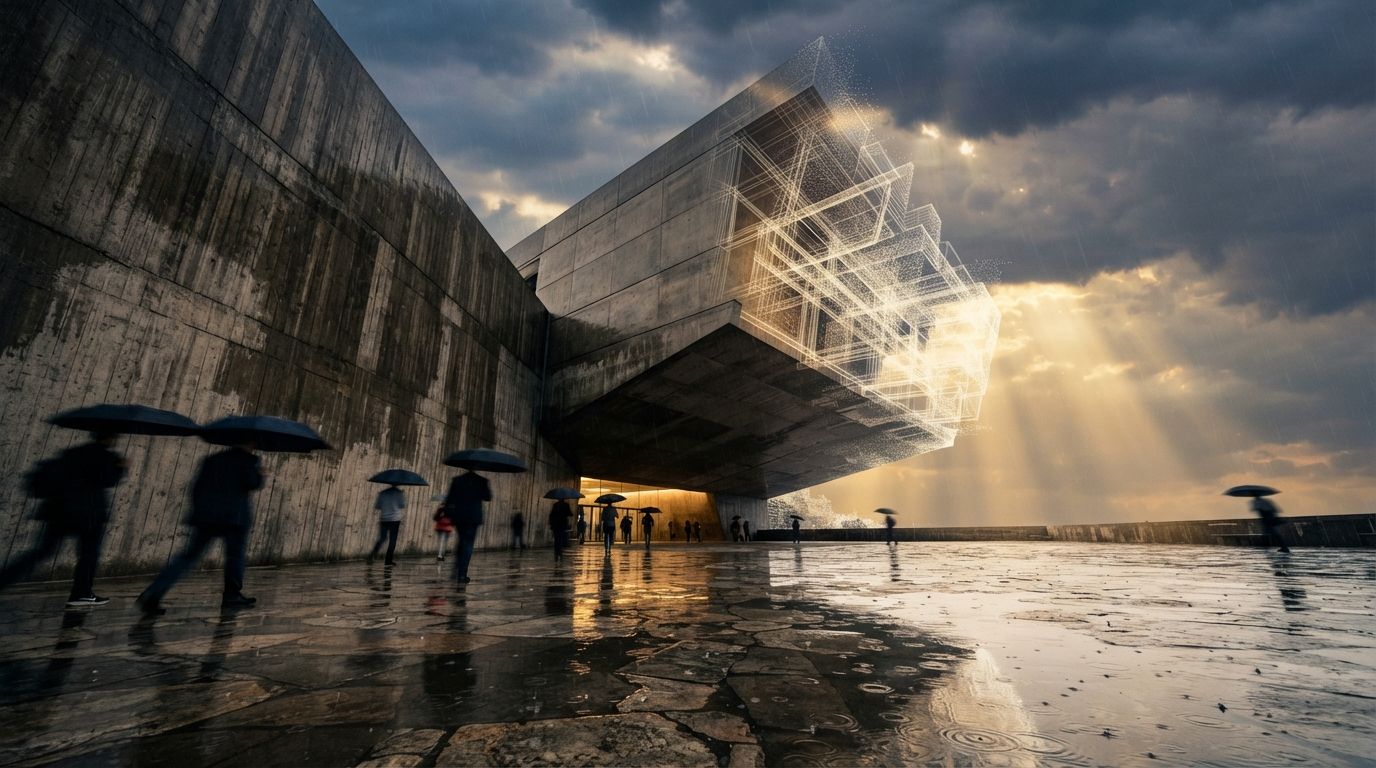
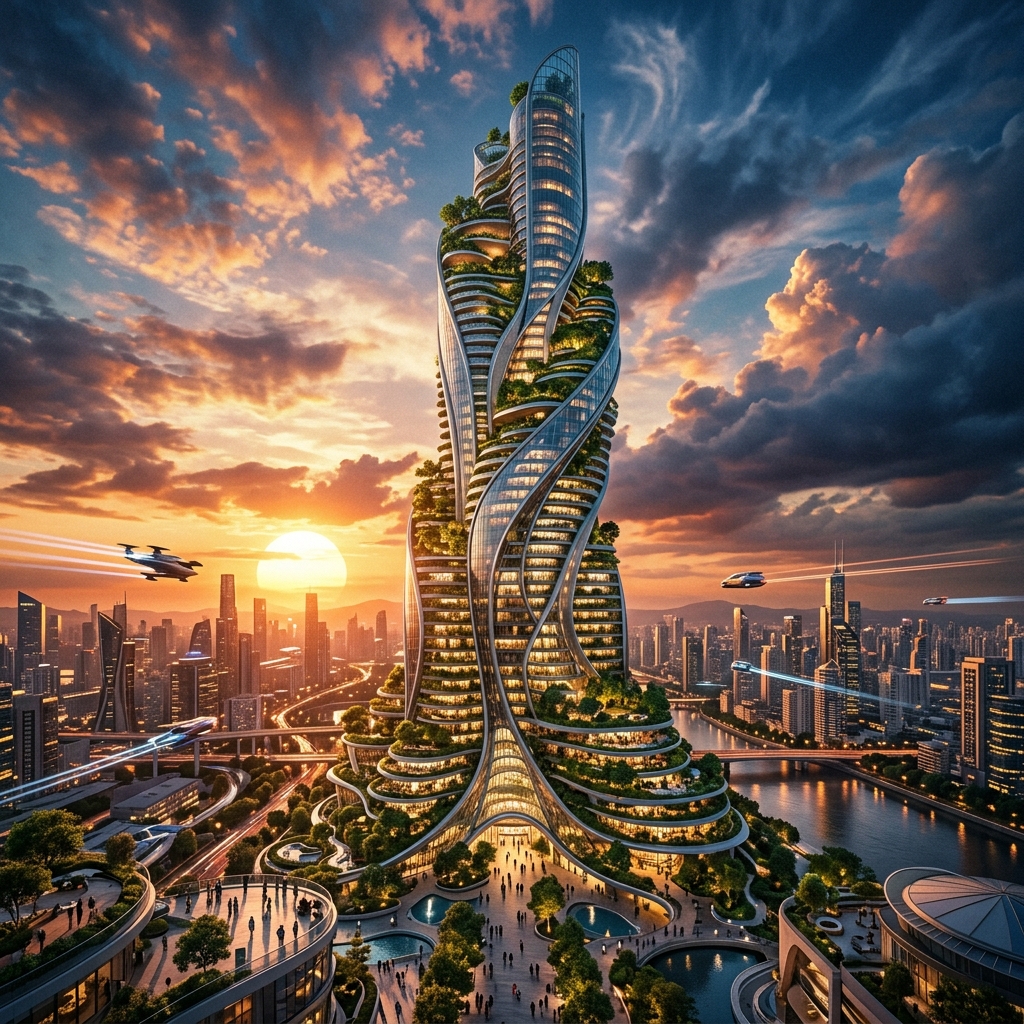
We get the same message in the inbox most weeks, in some variation: "I love what Midjourney does to my concept boards, but it keeps redrawing the building. I move one window and it gives me a different house. What should I use instead?" It is the right frustration and, usually, the wrong question. The person asking does not actually want a different image generator. They want the atmosphere Midjourney produces and the geometry their model defines — and those two things live in different categories of tool.
So before we hand over a list, it is worth being clear about what you are trading away when you leave, because the best alternative depends entirely on which half of Midjourney you cannot live without.
What Midjourney is genuinely great at
Let us not pretend the search is driven by Midjourney being bad. Version 8 produces some of the most beautiful architectural imagery available from any tool, full stop. For mood boards, competition cover images, the early "what is the feeling of this project" phase, and any moodset where nobody is going to check whether the mullion spacing is correct, it is still the reference. The illustrarch guides keep circulating for a reason: Midjourney's lighting, materiality and atmosphere are exceptional, and prompt-craft genuinely compounds the more you use it.
The wall it hits is the one every practitioner eventually describes the same way: it has no idea what your building is. Midjourney reads text, not models. Feed it "four-storey brick residential block, ground-floor retail, north-facing courtyard" and it will invent a plausible building — not yours. Iterate, and it invents a different one. There is no continuity between your CAD geometry and the image, because the geometry never enters the room. For a concept board that is freedom. For a client who expects to recognise the scheme they approved, it is a liability.
Midjourney does not render your building. It renders a beautiful opinion of what a building like yours might feel like — and the gap between those two things is exactly where the "alternative" search starts.
The split that actually matters in 2026
Sort the field by one question — does the tool take your 3D model as input? — and the confusion clears immediately. Everything else (price, speed, prompt syntax) is secondary to this single architectural distinction.
| Question | Prompt-only (Midjourney, DALL·E, generic SD) | Model-aware (Veras, ArchiVinci, Rendair, Arko) |
|---|---|---|
| Keeps your exact geometry | No — reinvents it every time | Yes — renders the model you drew |
| Atmosphere / artistic ceiling | Highest in the market | Very good, slightly more literal |
| Client-facing fidelity | Risky — "that is not our scheme" | Safe — recognisably the project |
| Iteration without drift | Drifts on every regen | Stable — geometry is locked |
| Best phase | Concept, mood, competition covers | Design development to client delivery |
If your honest answer to "keeps your exact geometry" is "I need that," you are not looking for a Midjourney alternative at all. You are looking for a model-aware renderer, and the four below are the ones we keep coming back to.
The four alternatives that keep your building
The closest thing to a default answer. Veras runs inside your modeller and renders the actual viewport — it is the one tool reading geometry from seven BIM/CAD platforms, and the recent move to a Nano Banana Pro engine cleaned up artefacts noticeably. You prompt for material and mood; the walls, openings and massing stay exactly where you put them. If "stop redrawing my building" is the whole complaint, start here.
The gentlest landing for a Midjourney refugee. ArchiVinci leans on intelligent denoising, automatic lighting calibration and material prediction, and it will take either a line sketch or model geometry. It is more literal than Midjourney and less configurable than Veras, but for solo practitioners and students who want model-faithful output without learning a node graph, it is the path of least resistance.
Rendair has built its entire pitch around the argument we are making here — that architects should move off tools that reinvent geometry from a prompt and onto tools that respect the model. In practice it sits between ArchiVinci's simplicity and Veras's depth, and it is worth a trial specifically if your work is BIM-led and you want the render step to feel like part of that pipeline rather than a detour into an image generator.
Arko keeps turning up in the cross-tool comparisons (PromeAI, Rendair, Midjourney, Veras, Arko) and is the one most Midjourney users have not tried. It is a model-aware renderer aimed at the SketchUp crowd, fast to results, and a reasonable middle option if Veras feels heavy and ArchiVinci feels too light. We cover the head-to-head in detail in our Arko AI vs PromeAI piece.
When you should actually stay with Midjourney
The reflex on a publication like ours is to push everyone toward the model-aware tools, but that is not honest advice for every job. There are real cases where Midjourney is still the right call and switching would be a downgrade:
- Pure concept and mood work. Competition cover images, "what is the spirit of this place" boards, atmosphere studies where geometric accuracy is irrelevant. Nothing beats it here.
- The site or project does not exist yet. If there is no model to read, the model-aware advantage evaporates. Prompt-only tools are perfectly suited to the blank-page phase.
- Texture, sky, entourage and reference plates. Midjourney is a superb supplier of components you composite into a model-aware render later — a hybrid most working studios already run.
That hybrid is the quiet truth of the whole debate. The strongest workflows we see are not "Midjourney or a render plugin." They are Midjourney for the mood pass and a model-aware tool for the deliverable — two jobs, two tools, no pretending one does both.
We test these tools on real project geometry, not demo scenes.
The ArchiGen AI journal runs the model-aware renderers against live SketchUp, Rhino and Revit work and reports where each one earns its keep. No affiliate links, no sponsored placements — just whether your building survives the render.
Read the journal →Our take
The "Midjourney alternative" search is a symptom, and the cure is usually not another image generator. If you keep losing your geometry, the answer is to render from the model, and in 2026 that means Veras first for serious BIM/CAD fidelity, ArchiVinci if you want the softest possible landing, and Rendair or Arko as credible middle options worth a trial. None of them will out-mood Midjourney — and they do not need to, because that was never the job you were hiring them for.
Our actual recommendation is to stop framing it as a replacement at all. Keep Midjourney for what it is best in the world at — atmosphere with no obligation to your drawings — and add one model-aware renderer for everything a client has to recognise. The architects who are happiest in 2026 are not the ones who found a perfect single tool. They are the ones who stopped asking one tool to be both an artist and a draughtsman.
No affiliate relationship with any tool named. Tool capabilities current as of May 2026 and change frequently — verify pricing and platform support before you commit.