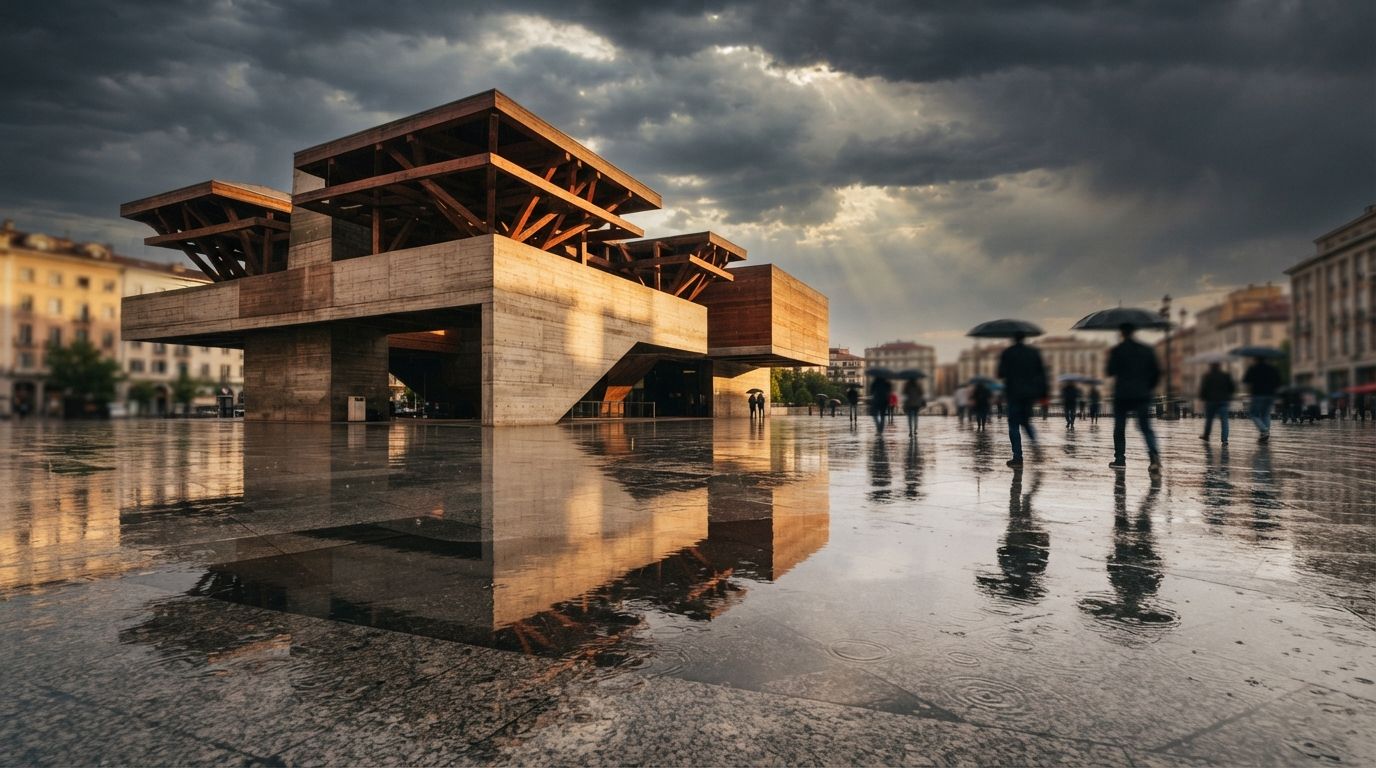
Walk into most firms still calling themselves AI-forward and you find the same pattern. Someone finishes a model in Revit or SketchUp, exports it, and hands it to Veras or an Enscape pass to get a client-ready image. That is the entire AI footprint on the project: one stage, at the very end, doing the job a renderer used to do by itself. It is a real improvement over the old workflow, faster and often better looking, but it is still AI bolted onto the tail of a process that was designed before AI existed. The interesting move this year is not happening there.
Where the threads actually are
Look at what people were posting in this week's sweep instead of the finished-render showcases. One thread is a beginner asking how to use Flux and ComfyUI for image-to-image work on architecture, not to polish a final shot but to push a rough massing study toward something they can react to. Another is someone running SDXL and Flux together inside a ComfyUI graph to test facade directions before a single wall is locked. A third is a Midjourney thread about keeping a set of AI-generated renders consistent across views, which only matters if you are using those views to actually make a decision, not just to impress a client after the decision is already made.
None of these people are asking "how do I render my building." They are asking "how do I use this to think faster, earlier." That is the shift Architect Magazine is describing in trend language, and it is already visible in the raw, unpolished questions people ask in public forums when nobody is trying to sell anything.
The render pass is where AI proves itself to the client. Concept and massing is where it is starting to prove itself to the architect.
The old model versus the one arriving now
The difference is not the tools, several of them are the same names you already use. It is where in the timeline they get picked up, and what kind of decision they end up touching.
| Bolt-on model | Workflow-first model | |
|---|---|---|
| When AI enters | After the model is finished | Before geometry is locked |
| Typical tools | Veras, Enscape, D5, real-time render engines | ComfyUI graphs, Flux img2img, Midjourney, sketch-to-render passes |
| What it decides | How the finished design looks in a picture | Which massing, material, or facade direction gets developed at all |
| Who feels the benefit | The client, at the reveal | The architect, mid-decision |
| What a slow adopter loses | Prettier renders, eventually | Speed on the decisions that are hardest to undo later |
Why the earlier stage is harder to skip
A firm that never touches AI until the render pass is not behind on picture quality, most client-facing renders still look fine either way. What they are actually behind on is option volume. A ComfyUI graph that turns a sketch into five facade variants in the time it takes to get coffee changes how many directions get seriously considered before a team commits. Skip that stage and you are still making the same number of decisions, just with fewer options actually tested, because testing them by hand was too slow to bother.
Why the render pass alone can hide this
This is the part firms miss. Because the final render still looks AI-assisted and modern, it is easy to assume the whole workflow is caught up. It is not. A gorgeous Veras pass on a design that was only ever explored three ways in SketchUp is still a design that was only explored three ways. The AI made the last ten percent faster and left the first sixty percent exactly as slow as it always was.
What the early-stage version actually looks like
Strip the jargon out of the ComfyUI thread and the workflow is not exotic. Someone exports a rough massing screenshot or a hand sketch, runs it through a depth or canny control pass so the AI respects the block volumes instead of inventing a new building, then generates a batch of material and facade variants against that same control image. The Flux beginner question is the same idea at an earlier rung: a person who has never touched image-to-image work asking how to push one rough concept photo toward several plausible directions without losing the massing underneath it. Nothing about either thread requires a finished model, a rendering license, or a dedicated visualization hire. It requires a laptop and an afternoon.
The Midjourney consistency thread fills in the last piece. Once you accept that AI-generated options are being used to make real decisions, keeping a set of views recognizably the same building stops being a nice-to-have and becomes the whole point. A facade study that looks different in every generated angle cannot be pinned to a wall and discussed, it can only be admired one image at a time. The people solving for consistency are not chasing polish. They are trying to make the output usable as a design tool rather than a demo reel.
What it changes about the team, not just the tool
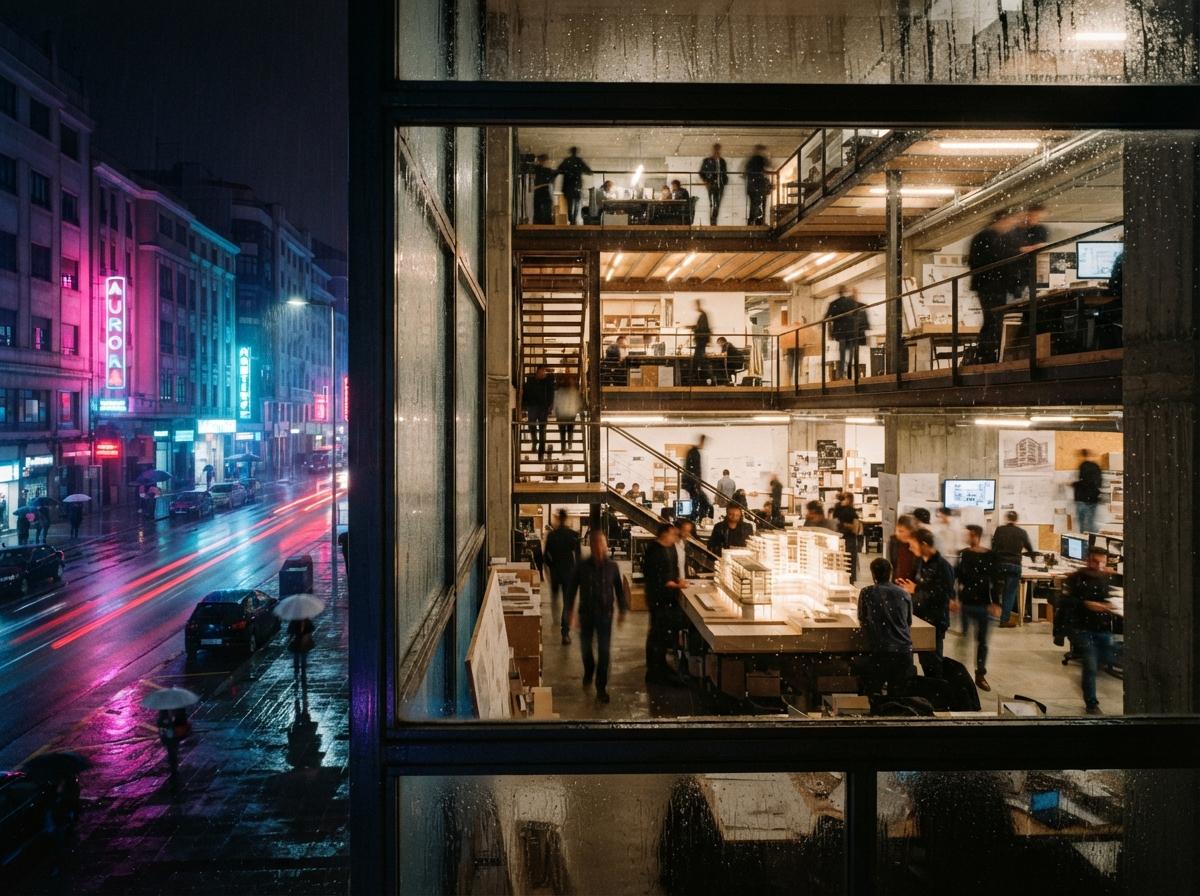
Firms that move AI earlier tend to notice a second-order effect they did not budget for: the skill that matters shifts. Knowing which renderer produces the nicest light stops being the differentiator, because by the time a project reaches the render pass the interesting decisions are already made. What starts to matter is who on the team can run a ComfyUI graph, judge a control-net pass, or push Flux settings without babysitting every generation, because that person is now sitting in on massing and material conversations that used to happen with markers and trace paper. It is a workflow literacy problem before it is a software-purchase problem, and it explains why some firms with access to the same tools as everyone else are still stuck at the bolt-on stage. Nobody on the team has actually run the early-stage workflow enough times to trust it.
An audit, not a shopping list
You do not need a new tool to check where you actually stand. You need to look at your last three projects and mark, honestly, where AI touched them.
- Only at the final render: you are running the bolt-on model. Nothing wrong with that today, but you are one stage behind where the field is already moving, and you will feel it first in how many concept directions your team can afford to test.
- At concept and at the render: you are running the workflow-first model on at least one end. The gap left is usually design development, the middle stretch where geometry firms up and AI tends to disappear again because the tools feel too loose for that stage.
- Nowhere yet: start at the render pass anyway, it is still the easiest entry point and the lowest-risk one. Just do not mistake it for having caught up.
The honest answer for most firms is the first one, and that is fine as a starting point. It stops being fine only if it is treated as the finish line.
Our take
The trend piece framing AI as reshaping the whole workflow is correct, but it undersells how mundane the actual shift looks day to day. Nobody in these threads is talking about a new era of design thinking. They are asking beginner questions about Flux settings and how to keep five renders looking like the same building. That is what the shift actually looks like from inside it: unglamorous, iterative, and already three steps ahead of firms that think they are current because their final renders look sharp. The render pass was never the interesting part. It was just the part you could see.
Written from the 30 July 2026 intel sweep, which surfaced Architect Magazine's piece on AI reshaping archviz workflows alongside community threads on Flux and ComfyUI image-to-image for architecture, a SDXL plus Flux ComfyUI archviz workflow, and a Midjourney thread on cross-view render consistency. ArchiGen AI carries no sponsored placements.