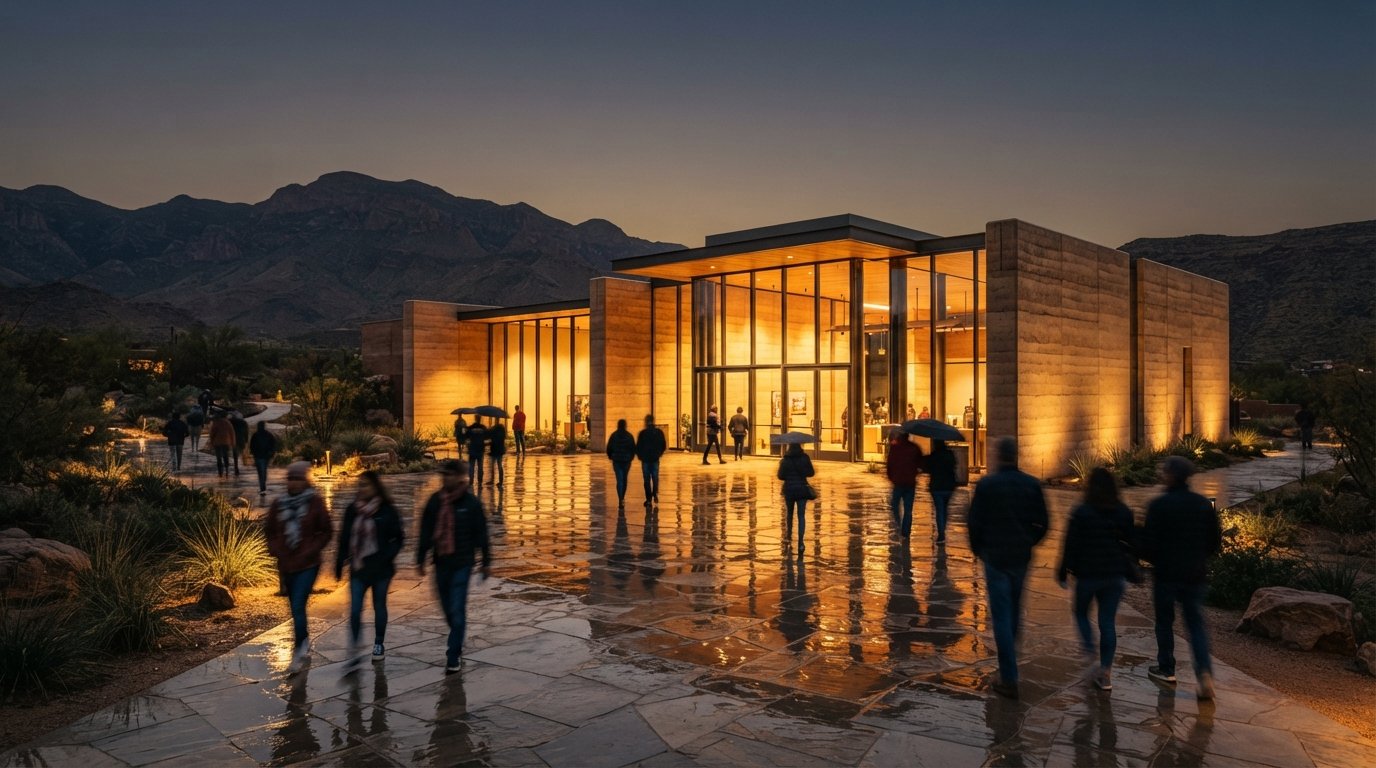
Every few months the question comes back in the archviz forums, phrased a dozen ways but always the same underneath: now that real-time looks this good, do I still need AI rendering? The 2026.1 release of Twinmotion made it louder, because the engine got noticeably closer to the photoreal stills that were AI's whole pitch. So people line the two up like rivals and ask which one to bet the studio on. That is the wrong shape for the decision. You do not choose between a camera and a sketchbook. You reach for whichever the moment needs.
What 2026.1 actually is
Twinmotion is Epic's real-time visualization tool, and the 2026.1 build runs on Unreal Engine 5. The short version of what it does: it takes the model you already built in Revit, Archicad, SketchUp, or Rhino through a live Datasmith link, and renders it at interactive speed with path-traced lighting that solves while you move. Drop a sun, walk the camera, and the shadows and bounce update in front of you. Add it all up with a library of vegetation, people, and materials, and you can stand in a space that does not exist yet and turn around inside it.
The thing to hold onto is the word real-time. Twinmotion knows about the last frame, and the next one, and every camera in between, because it is rendering one continuous three-dimensional scene. That single fact is the whole reason the comparison with AI rendering breaks down, because an AI diffusion tool has no idea what it drew thirty seconds ago.
Where the engine wins
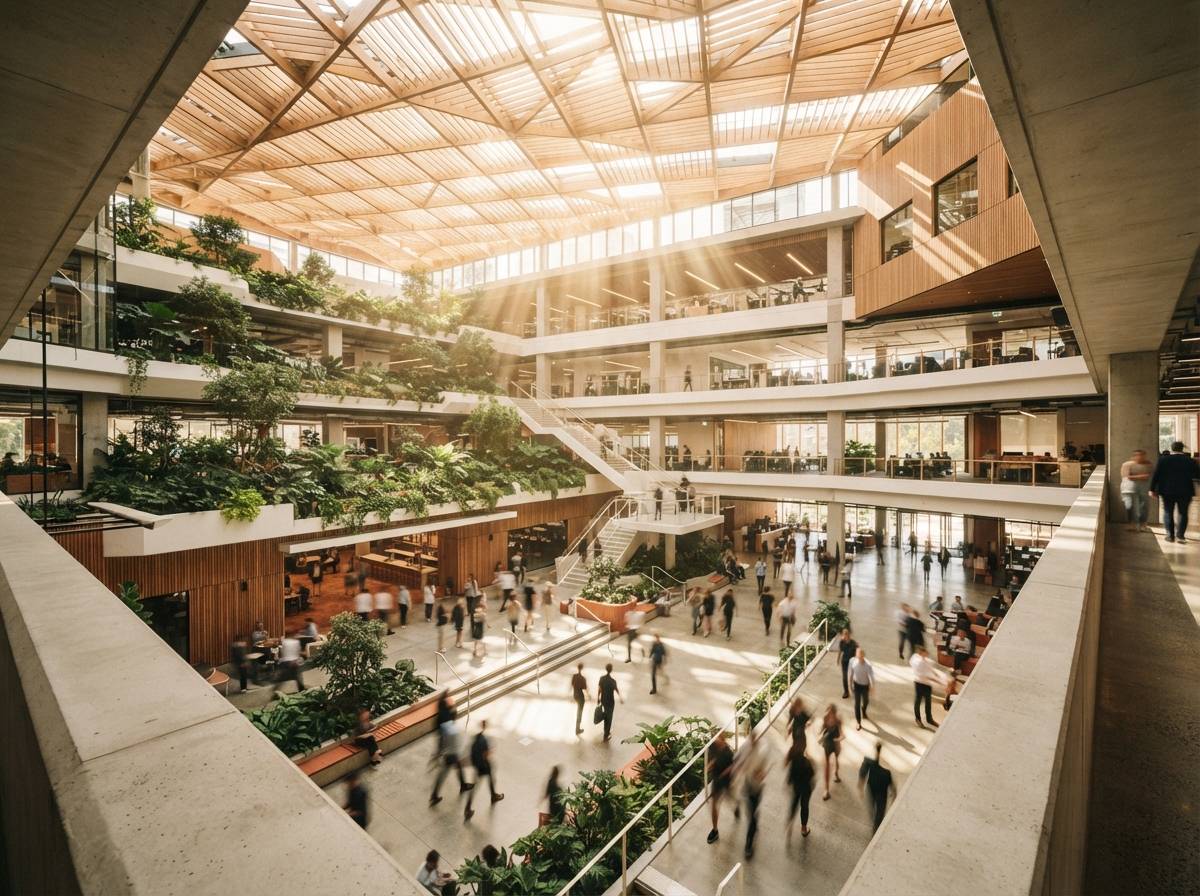
Real-time owns anything that moves or anything that has to agree with itself across many views. A flythrough of the approach, a walkthrough a client steers themselves, a VR session where the partner puts on a headset and stands in the lobby: none of that is possible with a tool that makes one picture at a time. The engine also keeps the building honest. The window heights are the heights you modeled, the floor plate is the plate you drew, the sun on March 21 at 9am is where the sun actually is. When a planning officer or a structural reviewer is in the room, that fidelity is not a nicety, it is the point.
It also wins on iteration once the model is in. Change the facade, and every camera you saved re-renders correct without re-prompting anything. Consistency across a deck of twenty images is free, because they are all the same scene from different angles. Getting that kind of agreement out of AI tools takes real effort, which we covered in our piece on holding a render set consistent across views. In Twinmotion it is simply how the tool works.
Where the model wins
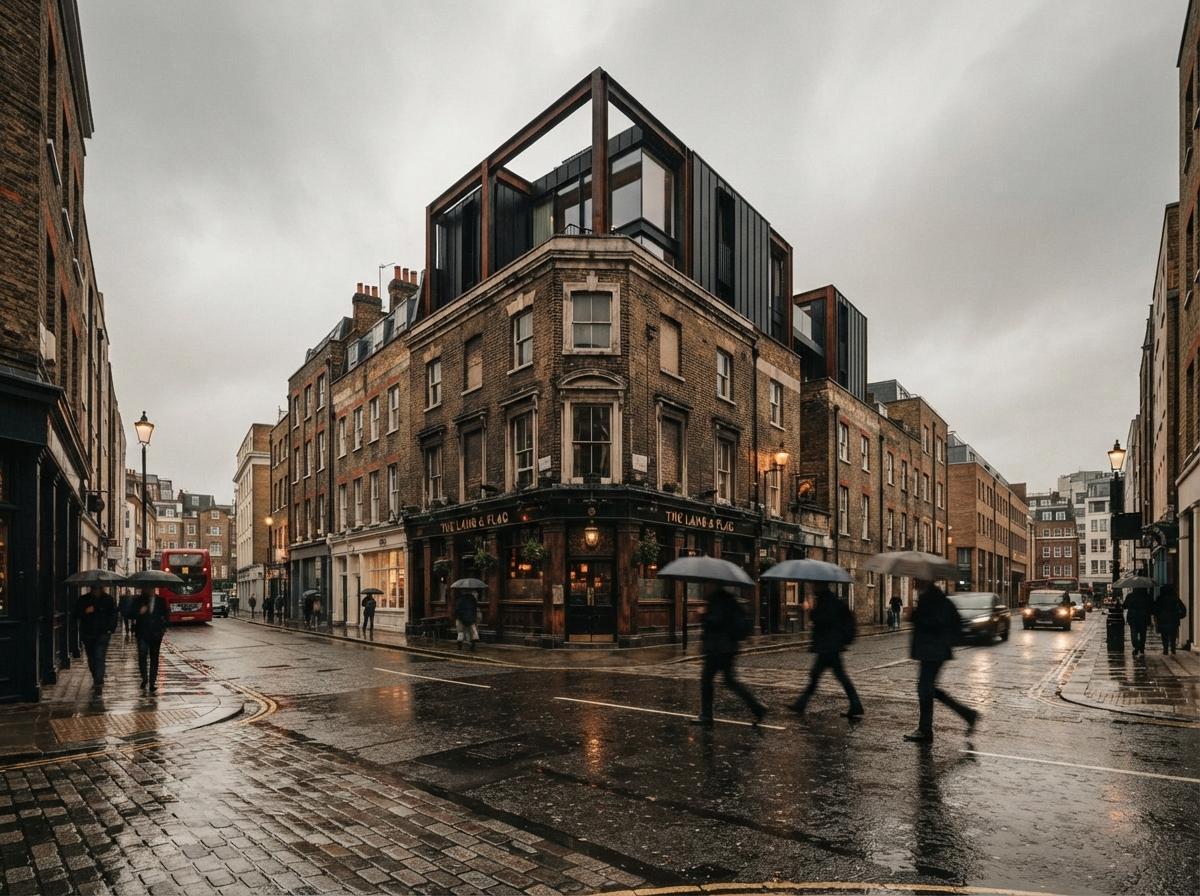
AI rendering wins at the front of the project, before there is a model worth importing. A loose massing and a paragraph of intent can become a mood image in two minutes, which is exactly what the concept stage needs and exactly what an engine cannot give you, because the engine has nothing to render until you have built something. It also wins on richness you did not model. A weathered brick, a particular quality of late light, a street that feels lived in: the diffusion tools invent that texture for free, while in Twinmotion you place every asset yourself.
And it wins on the single hero still. When you need one image to carry a competition board or a pitch, and you want it to look like a photograph someone took on a good day, a strong AI render gets there faster than building, lighting, and dressing a full real-time scene for one frame. We mapped where that concept-stage speed pays off in using AI renders at the concept and schematic stage. The cost is control: the AI image is plausible, not accurate, and it will quietly invent geometry you never drew.
| The deliverable | Reach for | Why |
|---|---|---|
| Client walkthrough or VR | Real-time engine | Motion and steering; AI cannot animate a coherent space. |
| Concept-stage mood image | AI rendering | No model needed; speed to a feeling beats accuracy. |
| Planning or review submission | Real-time engine | Geometry, sun angles, and sightlines must be true. |
| Single competition hero still | AI rendering | One photographic frame, fast, where plausible is enough. |
| Twenty-image consistent deck | Real-time engine | Same scene, every camera agrees by default. |
| Material and finish exploration | AI rendering | Invents texture you have not modeled yet. |
The hybrid most firms actually run
The interesting answer is not either column. It is the order you put them in. The stronger setup is the engine first and the model second: build the scene in Twinmotion so the massing, sightlines, and sun are correct, export the stills, then run a light AI enhancement pass for sky, atmosphere, and a little material warmth that a raw real-time frame can miss. The engine guarantees the building is right. The AI step adds the last bit of mood that would otherwise need manual grading.
The discipline is keeping the AI pass on a short leash. The moment you let it redraw the structure, you have traded away the one thing the engine bought you, which was a building that matches the drawings. Treat the enhancement as finishing, not generation, and you get the speed of AI atmosphere on top of geometry you can defend. This is the same direction the real-time tools themselves are moving, which we traced in how real-time renderers are absorbing AI, and it is why the rivalry framing ages badly. The two are converging into one pipeline.
The engine renders what you built. The model renders what you described. Confusing the two is how decks end up beautiful and wrong.
Our take: buy the engine, rent the model
If you have to commit budget and learning time in one place, put it in the real-time engine. The reasons are unglamorous and they hold. The engine is the tool that keeps you honest in front of the people who can stop your project, it is the one that scales to motion and VR you cannot fake, and its skills (lighting, camera, composition) transfer to whatever you render with next. AI rendering, by contrast, is cheap to pick up per project and changes so fast that deep investment in any one tool dates quickly. Learn the engine like a craft. Use the AI tools like a fast pencil.
None of which means ignore the diffusion tools. It means know what each is for. The studios that waste the most time in 2026 are not the ones missing a tool. They are the ones rendering a planning submission in a tool that hallucinates windows, or burning a day building a full real-time scene for one concept image a prompt could have produced before lunch. Match the tool to the deliverable, and most of the agonizing about which one wins simply stops mattering.
Twinmotion 2026.1 did not end the AI render era. It clarified the division of labor. Pick up the right one for Friday, and the right one for Monday, and stop asking them to be each other.
Drawn from this week's intel sweep of 2026 architectural visualization coverage, where Twinmotion 2026.1 and a run of speed-versus-realism software comparisons sat alongside the recurring community question of whether real-time has made AI rendering redundant. Twinmotion is an Epic Games product; ArchiGen AI has no affiliate relationship with Epic or any AI rendering tool named here.