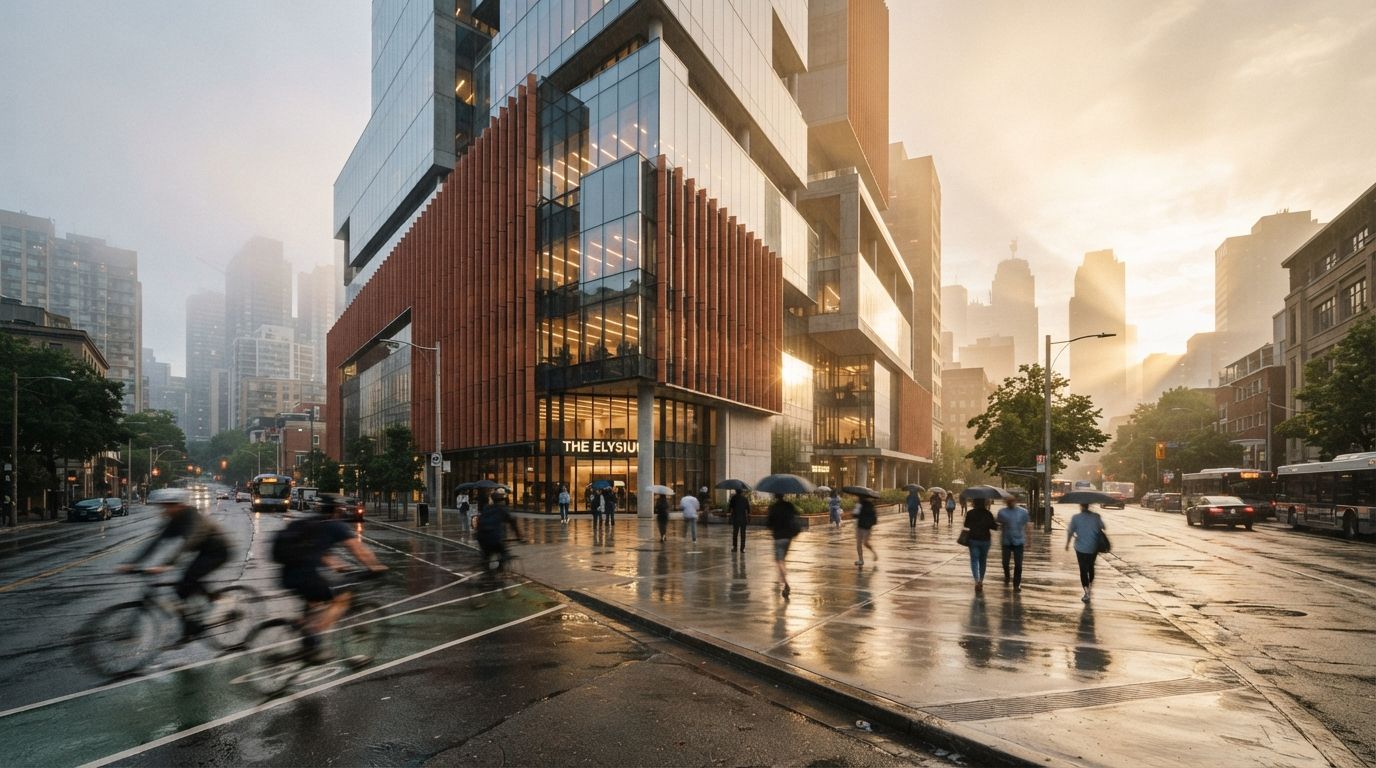
Take the objection at full strength, because it is a good one. An architectural rendering is not a picture of a building. It is a claim about a building: this facade, on this street, in this light, will look like this. The client approves the claim. The planning committee conditions consent on the claim. Money moves because of the claim. Under that reading, a rendering is closer to a contract drawing in costume than to an illustration, and every pixel a diffusion model invents is unauthorized testimony. If the model widens a mullion, softens a reveal, or invents a fourth window because the composition wanted one, the image is now lying about the thing it exists to verify. The purist concludes: any alteration is harm.
Where the purists are right, they are completely right. Where they are wrong is in treating the whole frame as if it were the design.
The frame was never honest
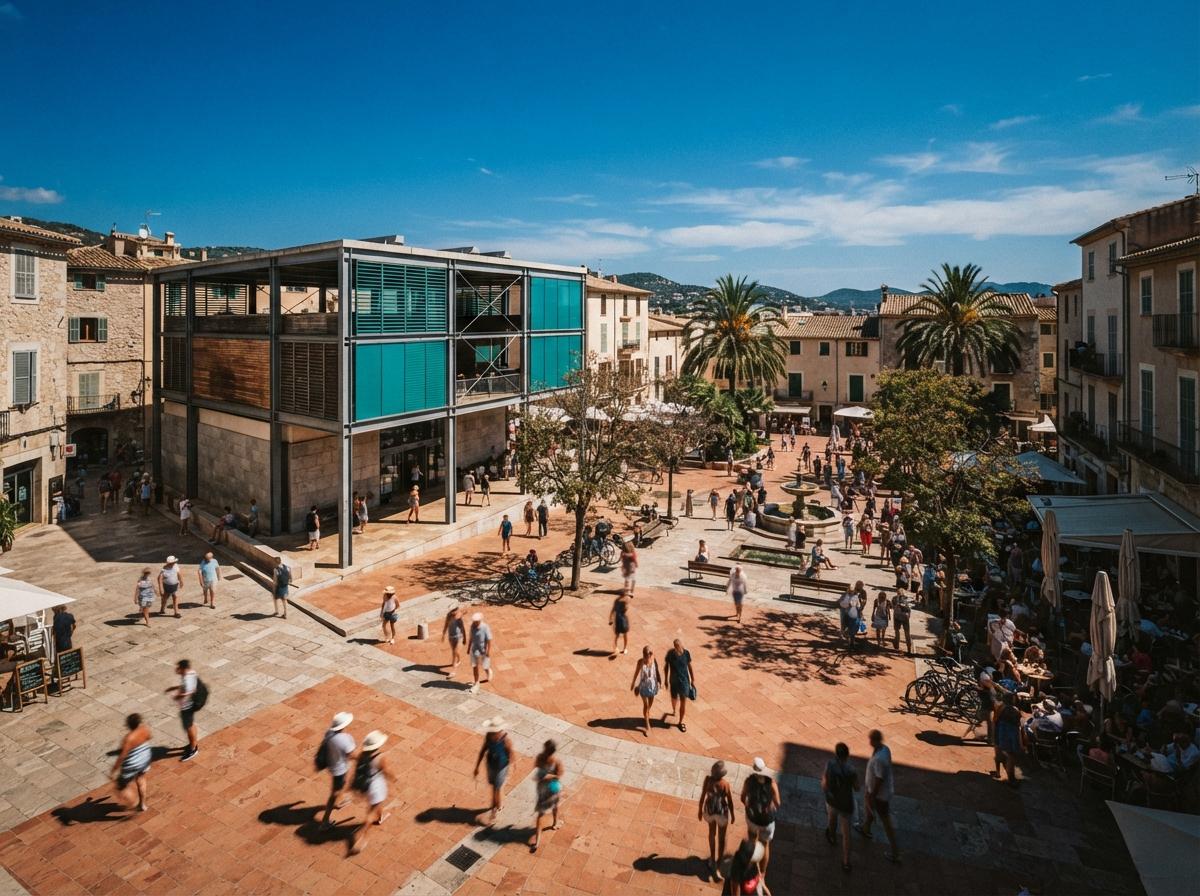
Consider what a conventional, pre-AI, fully respectable archviz image already contains. A sky photographed over a different continent. Trees purchased from an asset library, native to nowhere, placed for composition rather than horticulture. People frozen mid-stride who have never visited the site and never will. Traffic thinned to two flattering cars. Golden-hour light on a facade that faces north. Adjacent buildings gently faded so the proposal reads as the hero. Every one of those choices alters the specific context of the specific site, and the profession has spent forty years agreeing they are not lies but rhetoric. The genre's whole history, from hand-tinted perspective drawings to V-Ray, is curated fiction in service of a real design.
So the purist standard, taken literally, indicts the portfolio it is defending. The honest version of the position was never "nothing in the image may be altered." It was always narrower and stronger: the designed object must not be altered. The geometry, the proportions, the material logic, the parts of the frame that carry the architectural claim. The entourage was always negotiable. The sky was always a costume. What r/archviz is defending, correctly, is the integrity of the signal, not the purity of the noise.
The render was always fiction in the margins and testimony in the middle. The rule is to know where the middle is.
Drawing the actual boundary
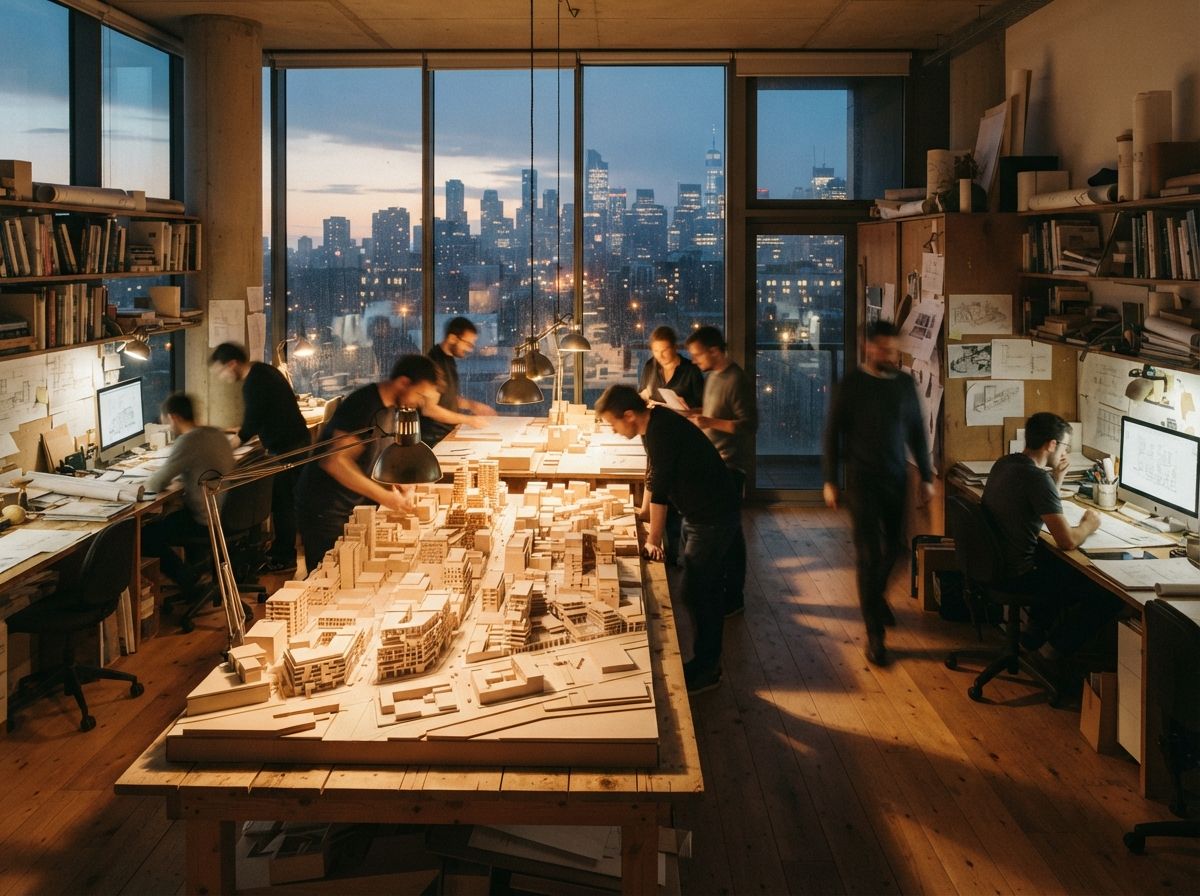
Put the boundary there, and the AI question stops being ideological and becomes operational. Some pixels in your image carry the design argument; they get zero tolerance for invention. Other pixels are context and atmosphere; they were fiction under Corona and they are fiction under FLUX, and the medium of the fiction does not matter. The practical craft of AI-era archviz is running that split deliberately instead of letting a checkpoint decide it for you.
That is precisely the direction the serious tooling has moved, because vendors can read forums too. Veras built design lock and geometry preservation as headline features. The low-denoise and ControlNet techniques exist to let a model improve lighting and material response while touching nothing structural. A whole class of geometry-aware renderers now treats the model as ground truth rather than as a prompt suggestion. We keep a running survey of adherence controls because this is the axis on which the tools genuinely differ, and it is the axis the vendor listicles rank last, when they rank it at all.
The boundary also moves with the project phase, and pretending otherwise flattens the debate. At concept stage, the image is a question, not a claim; if the model invents a colonnade and the client points at it, that is exploration doing its job. At design development, the tolerance tightens. At approvals, planning, and anything a signature lands on, the purist rule applies in full: nothing generative touches the designed object, every image gets a geometry QA pass, and if the process materially shaped the image, you disclose it. One tool policy across all three phases, whether purist or permissive, is the actual malpractice.
Our take
The reason this argument stays heated is that both camps are answering different questions and calling it disagreement. The enthusiasts are answering "can AI make useful architectural images," and the answer is obviously yes. The purists are answering "can an image that testifies about a specific design tolerate unauthorized invention," and the answer is obviously no. Both are correct. The failure mode is in the middle: firms using a generative tool in a testimonial moment, with default settings, no adherence controls, and no QA, then wondering why the built facade disappoints the committee that approved a hallucination. The fix is not abstinence and it is not enthusiasm. It is knowing, for every image you ship, which pixels are under oath.
The purist says the AI must not touch the design, and the purist is right. The purist says that makes the AI harmful, and the sky in their own portfolio disagrees.
Written from the July 10, 2026 intel sweep: the r/archviz ComfyUI thread restating the design-fidelity objection, alongside this week's ComfyUI workflow requests on r/FluxAI and r/comfyui. No affiliate relationship with any tool named.