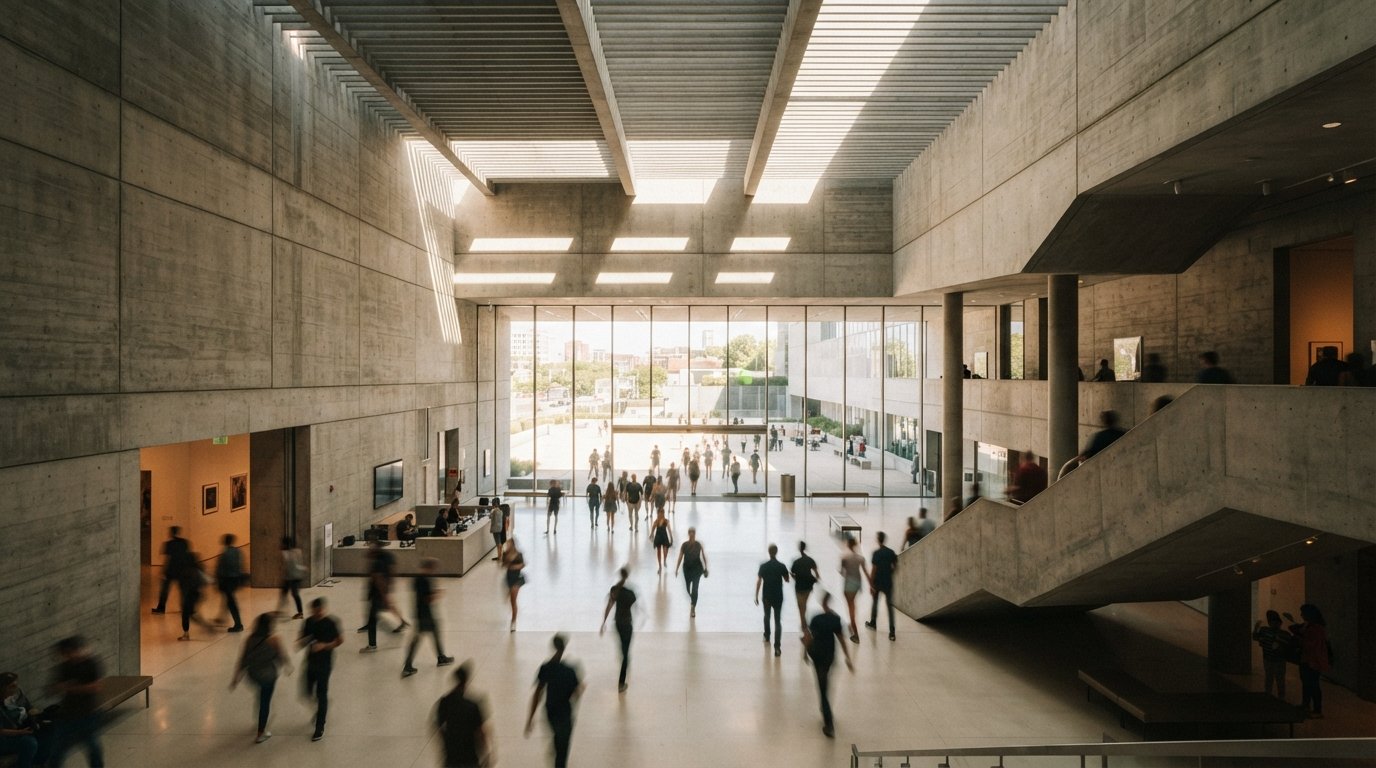
Why do AI architectural renders look fake?
AI renders usually look fake because of physics, not geometry. Five tells give them away: shadows that disagree on the sun, materials at the wrong scale, reflections that do not match the scene, cloned entourage, and surfaces too clean to be real. Each one is local, so a masked repair usually beats regenerating the whole frame.
Start by separating two problems that get lumped together. One is geometry hallucination, where the model invents a column, warps a mullion, or bends a stair. We wrote the pre-presentation pass for that in the geometry QA checklist, and it is a different failure. This piece is about the render where nothing is structurally wrong and the image still fails the half-second test. That failure is physical. Light, material scale, reflection logic, repetition, and surface wear are the five channels where a diffusion model quietly breaks the laws your eye has been calibrated on since birth. You do not consciously check them. You feel the result.
Tell one: light from nowhere
The fastest giveaway. In a real photograph every shadow in the frame agrees on where the sun is. In an AI render they often do not. A tree throws a shadow to the left, the building throws one to the right, a bollard throws none at all. Worse, the objects float, because the model skipped contact shadow, the small dark gradient where a thing meets the ground. Without it a chair, a planter, or an entire building sits a centimetre above the floor and the brain screams collage.
The fix. Pick the sun. Decide one direction and one time of day before you generate, and reject any output where shadows disagree. For a render you otherwise like, do not start over. Add contact shadow and ambient occlusion in a local pass, or relight the whole frame with a controlled sun angle rather than regenerating from scratch. Our relighting walkthrough covers the img2img route that changes light while holding everything else. This one tell fixed is often the whole difference between fake and finished.
Tell two: materials at the wrong scale
The model knows what brick looks like. It does not know how big your brick is. So it renders coursing at the scale that was most common in its training images, which is rarely the scale of your wall. Brick reads as blockwork, blockwork reads as tile, timber cladding gets a grain so fine it looks printed, and a stone floor tiles at a pattern no quarry cuts. Nothing is hallucinated. Everything is the wrong size, and size is the cue the eye uses to judge the whole building.
The fix. Anchor scale with something the eye trusts. A door, a step, a handrail at known height gives the model and the viewer a ruler. When a surface comes back mis-scaled, mask it and regenerate that region with a prompt that states the module ("standard 215mm brick, three courses visible per metre"), or fix it in a targeted inpaint rather than re-rolling the camera. Material scale is where the material study workflow earns its place: get the finish right in isolation first, then bring it into the scene.
Tell three: reflections that lie
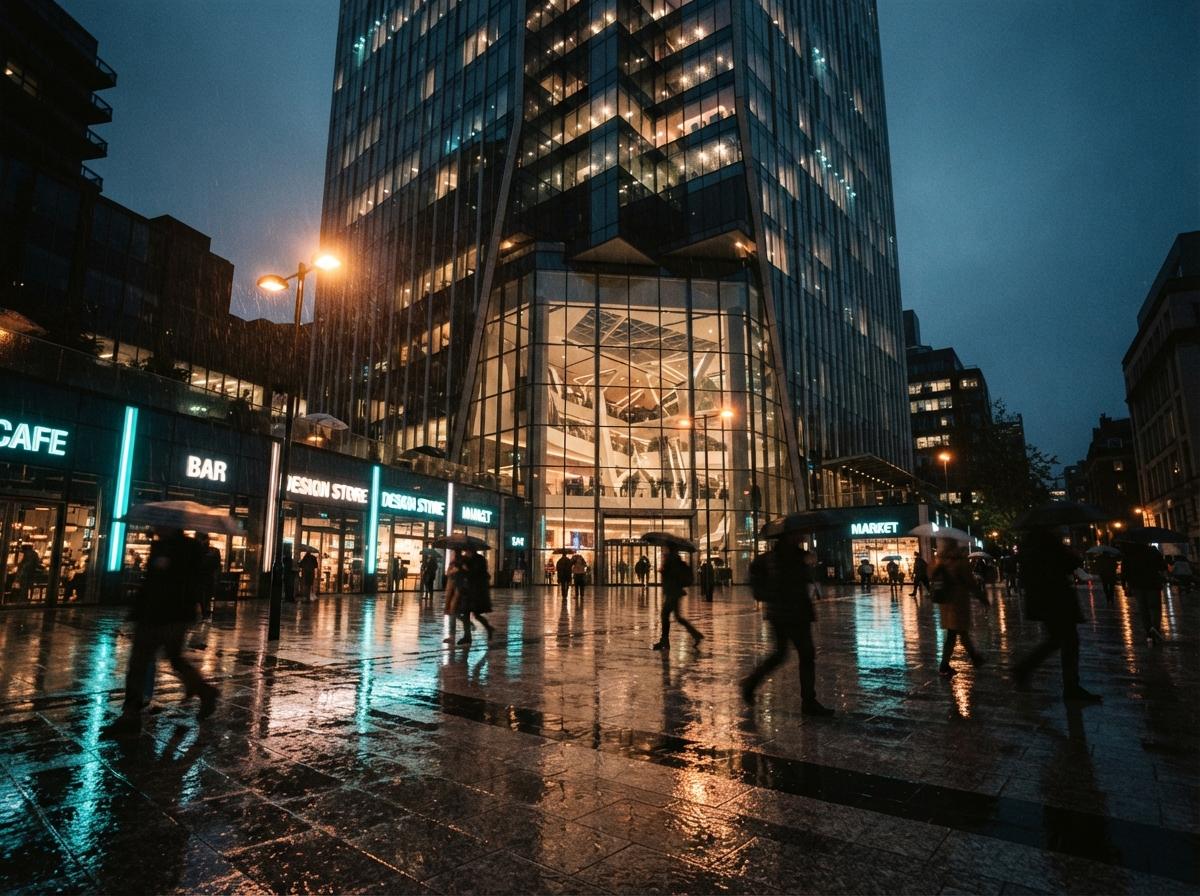
Glass and polished floors are where diffusion models are caught most often, because a correct reflection is a physics computation and the model is doing a plausibility guess. So the curtain wall reflects a sky that is not in the frame, the shopfront mirrors a street that does not match the one in front of it, and a wet plaza reflects buildings at the wrong angle. On a hero shot with a lot of glazing, this is the tell a fellow architect spots first, because reading facades is the job.
The fix. Check every reflective surface against the scene it should be reflecting. Where it lies, mask the glass and regenerate only that panel, or composite a corrected reflection by hand. The deeper treatment, including when to model reflections properly instead of guessing them, is in our piece on glass and reflections in AI renders. If a facade is mostly glazing, this is not optional polish. It is the subject.
Tell four: the cloned world
Real streets are messy. AI entourage is suspiciously tidy. The same tree appears three times at the same rotation, two pedestrians share a face, a row of parked cars all point the same way and cast identical shadows, and the crowd has the posture of a stock photo. Individually each element is convincing. Repeated, they announce a machine, because nature and cities never repeat that cleanly.
The fix. Break the pattern. Vary species, rotation, and size in planting, remove the duplicate that reads first, and hand-place a few real cut-outs where the crowd matters. Entourage is the cheapest part of the image to fix and the one most worth the ten minutes, because a viewer forgives a plain surface long before they forgive the same tree twice. Our entourage guide goes through people and planting without the clone problem.
Tell five: too clean to be real
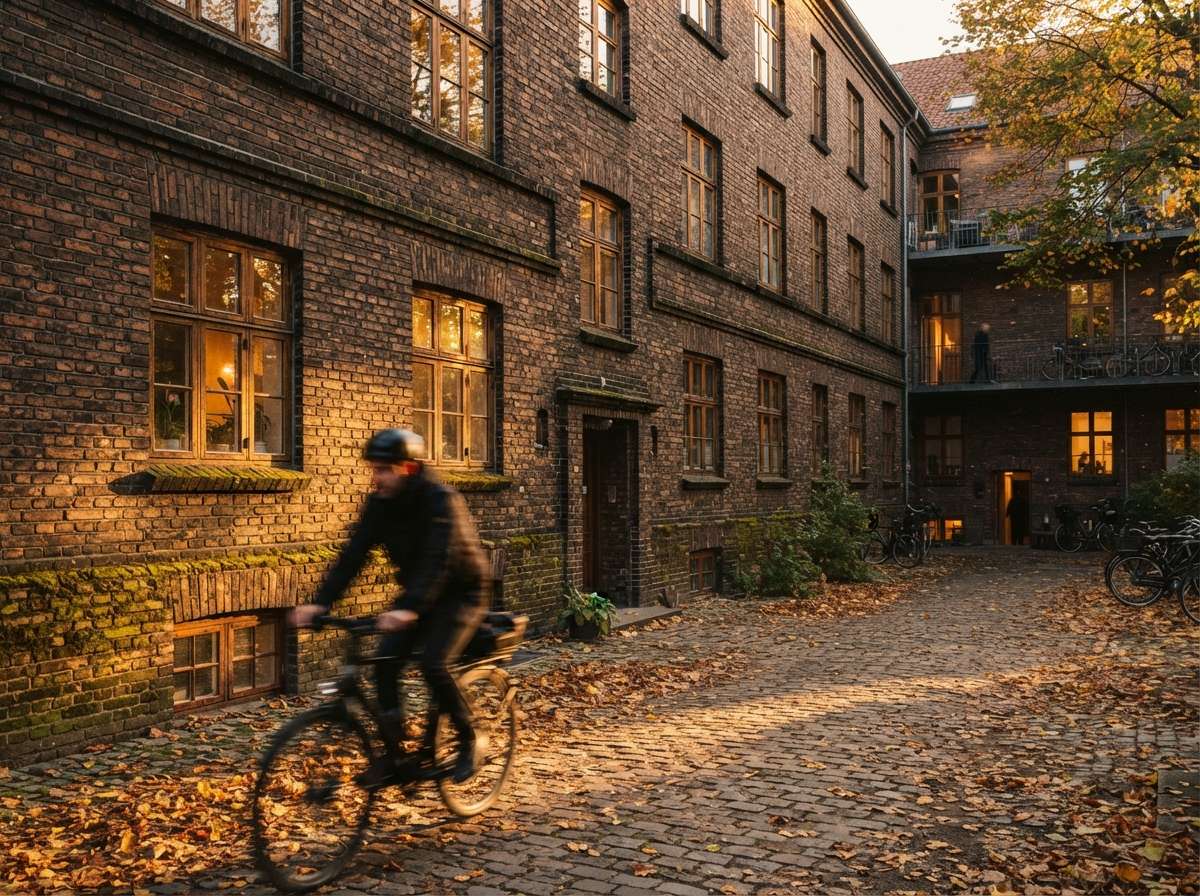
The subtlest one, and the last to fix. AI surfaces are often uniformly perfect. Everything is equally sharp, equally lit, equally new. No dust settles in the corner, no wear marks the threshold, no rain streaks the concrete, and the whole frame sits at one crisp focus with no falloff. Real cameras and real buildings both carry imperfection, and its absence makes an image feel like a product shot of a model rather than a photograph of a place.
The fix. Add controlled imperfection at the end. A grade pass to unify the color, a touch of grain, gentle depth of field so the eye has somewhere to land, and selective wear on the surfaces closest to the camera. This is the finishing move, and it is exactly the hand pass we describe in finishing an AI render by hand. Done well, it is invisible. Skipped, it is the reason a technically flawless render still looks synthetic.
Correct geometry gets you a model. Correct physics gets you a photograph. The eye can tell the difference in half a second, so the fix has to survive that half second.
Reading the tells in order
Run them fastest-to-slowest, because that is roughly the order a viewer catches them and the order that costs you the least to fix.
| Tell | What to look for | Cheapest fix |
|---|---|---|
| Light from nowhere | Shadows disagree on the sun; objects float with no contact shadow | Relight pass, add AO and contact shadow |
| Wrong material scale | Brick, tile, timber at a size no product is made in | Masked regen with stated module, or inpaint |
| Reflections that lie | Glass mirrors a scene not in frame | Mask the panel, regenerate reflection only |
| Cloned entourage | Same tree, face, or car repeated | Vary and remove duplicates, hand-place a few |
| Too clean | Uniform sharpness, no wear, no falloff | Grade, grain, depth of field, selective wear |
None of these needs a new camera or a new prompt roll. Every one is local, which is the whole point. The instinct when a render looks off is to regenerate the entire frame, and that instinct is usually wrong, because a fresh roll trades the tell you can see for two you have not found yet. The post-production pass order exists precisely so you repair in place instead of gambling on a re-render.
Our take
The reason this matters more than a tool choice is that the tells travel. Switch from Veras to a ComfyUI pipeline to Midjourney and the physics failures follow you, because they are properties of how diffusion guesses, not of any one product. That is good news. It means the skill you build reading light, scale, reflection, repetition, and wear is the durable part of this whole discipline, and the tool underneath can change every quarter without making you start over. The architect who can catch a floating shadow in half a second will still be useful when today's render tool is three versions obsolete.
Learn the five tells. The client cannot name them, which is exactly why they decide whether your image gets believed.
Written from recurring r/archviz and r/FluxAI threads in the July 6, 2026 intel sweep asking why AI renders still look fake and how to enhance lighting, textures, reflections, and planting. No affiliate relationship with any tool named.